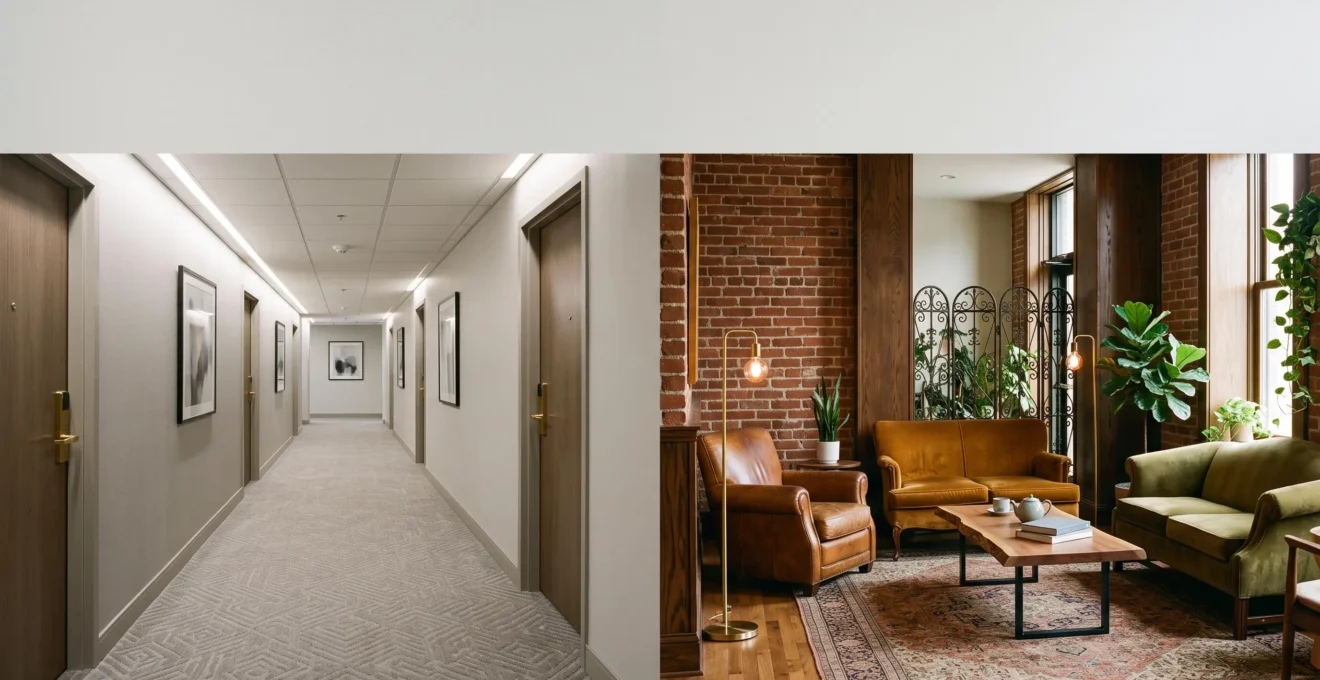
The best local experience doesn’t start when you leave your hotel; it begins in the lobby.
- Boutique hotels are evolving into neighborhood hubs, actively integrating local art, commerce, and community into their very design.
- Increasingly strict regulations in major U.S. cities are making short-term rentals like Airbnb a risky and less authentic alternative.
Recommendation: For a truly immersive urban trip, choose a boutique hotel that functions as a curated gateway to its neighborhood.
The modern urban traveler faces a familiar paradox. You crave an authentic connection to the city you’re visiting—to drink the coffee the locals drink, discover the art they celebrate, and feel the pulse of a real neighborhood. Yet, the default travel options often steer you toward a standardized, disconnected experience. The debate between a chain hotel and a boutique property is usually framed around predictable trade-offs: consistency versus character, loyalty points versus unique design. This conversation, however, misses the fundamental shift in modern hospitality.
The most forward-thinking boutique hotels are no longer just offering a quirky room; they are architecting an entire local experience. They operate as curated platforms, intentionally designed to plug you directly into the neighborhood’s creative and economic ecosystem. This isn’t about passively observing a culture from a hermetically sealed room; it’s about providing the tools and spaces for active participation. The choice is no longer simply about where you sleep, but about what kind of story you want to be a part of.
This guide deconstructs how boutique hotels build this immersive world, from lobbies that double as community centers to partnerships that bring the best of the neighborhood to your room. We’ll also explore the practical pitfalls of the alternatives, especially as major cities reshape the landscape for short-term rentals. It’s time to redefine what a hotel can be—not just a base for exploration, but the first and most vital stop on your local journey.
To help you navigate this new landscape of hospitality, this article breaks down the key elements that differentiate a truly local stay from a transient one. The following sections will guide you through the philosophy, design, and practical realities that define the modern boutique hotel experience.
Summary: Decoding the New Rules of Local Travel
- Why are lobbies at Ace or Hoxton hotels like co-working spaces?
- How do boutique hotels curate art from local neighborhood artists?
- The mistake of choosing a trendy hotel over a club if you want an early night
- Local partnerships: why is the coffee in your room better here?
- Courtesy bikes: how to explore the neighborhood for free thanks to the hotel?
- Historic hotel or rental: what to choose to avoid street noise?
- New York and the ‘Local Law 18’: how to know if your rental is legal?
- Is Airbnb Still Worth It in Major US Cities Given New Restrictions?
Why Are Lobbies at Ace or Hoxton Hotels Like Co-Working Spaces?
The sterile, transitory nature of the traditional hotel lobby is dead. In its place, visionary boutique hotels have engineered a new kind of space: the neighborhood hub. This isn’t an accident of design; it’s a strategic embrace of the sociological concept of the “Third Place.” Coined by sociologist Ray Oldenburg, these are the essential anchors of community life, the spaces beyond our homes (first place) and workplaces (second place). As he defined them, they are the “public places that host the regular, voluntary, informal, and happily anticipated gatherings of individuals.” By transforming their ground floors into vibrant, multi-functional zones, hotels like Ace and The Hoxton are no longer just for tourists; they are for the neighborhood.
Hotels Redesigning Lobbies Around the ‘Third Place’ Model
A growing trend in hospitality sees hotels adopting the “Third Place” model to create deeper community connections. By redesigning lobbies, restaurants, and public areas, they aim to attract local residents and diversify revenue streams, building a neighborhood relevance that extends far beyond overnight stays. This positions hotel spaces as dynamic venues for remote work, social gatherings, and community events, directly aligning with the core principles of Oldenburg’s influential concept.
This shift is palpable. You see it in the large communal tables populated with freelancers on laptops, the soft hum of conversation from locals meeting for coffee, and the curated playlists that feel distinctly non-corporate. These are not waiting rooms; they are living rooms for the city. This design philosophy serves a dual purpose: it offers the traveler an immediate, authentic entry point into the local scene and establishes the hotel as a vital, integrated part of the community’s daily life.
The result is a space that feels magnetic and alive. It dissolves the barrier between guest and local, creating an environment where spontaneous interactions can occur. You’re not just checking in; you’re plugging into the local social circuit. For the style-conscious traveler, this means the hotel itself becomes a destination—a place to see, be seen, and genuinely connect.
How Do Boutique Hotels Curate Art from Local Neighborhood Artists?
A hotel’s art collection is a powerful narrative tool. While chain hotels often opt for mass-produced, inoffensive prints, boutique properties use their walls to tell a story—specifically, the story of their neighborhood. This is not just about decoration; it’s about curation as a form of community engagement. By turning their spaces into galleries for local talent, these hotels become patrons of their immediate creative ecosystem, offering travelers a visual dialogue with the city’s artists.
This strategy is more than a feel-good gesture; it’s a significant business trend. An analysis of the hospitality art market shows that boutique properties now represent a fast-growing segment, with their share of the hotel art curation market expanding at a notable rate. This reflects a conscious decision to invest in authenticity. As The Artling, an art consultancy, notes, an “intimate boutique inn might focus on locally sourced artwork that adds a layer of authenticity.” This authenticity is precisely what the modern traveler seeks—a genuine connection, not a generic aesthetic.
Local Artist Showcases at Fairmont Pacific Rim and Hutton Hotel
Hotels like the Fairmont Pacific Rim in Vancouver and the Hutton Hotel in Nashville exemplify this ethos. The Fairmont provides a dedicated platform for regional talent through its Pacific Gallery, featuring rotating exhibits with a strong emphasis on local Vancouver artists. Similarly, Nashville’s Hutton Hotel immerses guests in the city’s vibrant creative scene with commissioned artworks and collections that guide visitors through its public spaces, creating a narrative journey from the lobby to its on-site performance venue.
For the guest, this means the hotel becomes a place of discovery. The piece above your bed or the sculpture in the courtyard isn’t just an object; it’s a conversation starter and a direct link to a local creator’s perspective. It transforms the hotel from a static environment into a dynamic cultural venue, offering a layer of storytelling that a standardized chain simply cannot replicate. It’s the difference between looking at a postcard of a city and visiting an artist’s open studio.
The Mistake of Choosing a Trendy Hotel Over a Club if You Want an Early Night
The very same energy that makes a boutique hotel’s lobby a magnetic “Third Place” can also be its greatest liability. When a hotel successfully becomes a neighborhood hotspot, complete with a popular rooftop bar, a ground-floor DJ, or an event space, it walks a fine line between “vibrant” and “unbearably loud.” For the traveler who values a full night’s sleep, choosing a trendy hotel without due diligence can be a critical mistake, turning a stylish stay into a sleepless one.
The aesthetic appeal and social buzz that draw you in can become your antagonists after 10 PM. The thumping bass from the club downstairs or the chatter from the all-hours terrace can easily bleed into guest rooms, especially in older, character-filled buildings that may lack modern soundproofing. This is the central paradox of the “hotel as a hub” model: you want to be close to the action, but not when you’re trying to sleep in it. It’s a classic case of wanting to have your cake and eat it too, where the “cake” is a vibrant social scene and “eating it” is getting eight hours of peace.
So, how do you find the balance? The key is proactive research. Don’t be swayed by curated Instagram feeds alone. Dive into the nitty-gritty of recent guest experiences. As one hospitality expert advises in Sunset Magazine, it’s crucial to “Read recent reviews from sources you trust and double-check when they were written.” Look for keywords like “noise,” “bar,” “music,” or “club” in reviews on multiple platforms. Pay attention to which floors or sides of the hotel are mentioned. Often, a simple request for a quiet room on a higher floor, away from the street or bar, can make all the difference. This small bit of homework separates the savvy traveler from the sleep-deprived one.
Local Partnerships: Why Is the Coffee in Your Room Better Here?
The immersive local experience of a boutique hotel extends beyond its public spaces and art; it permeates the smallest details of your private room. That exceptionally good cup of coffee you brewed in your room? It’s likely not from a multinational conglomerate. Instead, it’s the product of a deliberate local partnership—a tangible piece of the hotel’s commitment to its neighborhood’s economic ecosystem. This is where the boutique ethos truly shines: in the belief that luxury is local.
Unlike chain hotels, which rely on global supply chains for consistency and cost-efficiency, boutique properties often build their identity through a network of local suppliers. As the team at The Restoration Hotel points out, these establishments “frequently incorporate local architecture, regional design elements, and partnerships with nearby businesses.” This means the soap in your bathroom might be from a neighborhood apothecary, the snacks in the minibar from an artisanal maker down the street, and the coffee from a beloved local roaster. These aren’t just amenities; they are endorsements of local quality and craft.
This approach transforms the guest experience from one of consumption to one of discovery. Each product tells a story and offers a direct, sensory connection to the place you’re visiting. It’s a hyper-local supply chain that benefits both the traveler and the community. You get a higher-quality, more memorable product, and your money helps support the small businesses that give the neighborhood its unique character. This is a powerful, yet subtle, way the hotel acts as a curator, hand-picking the best of its surroundings for you to enjoy.
This philosophy of intentional sourcing is a quiet rebellion against the homogenization of travel. It’s a declaration that the best experiences are often the ones grown, crafted, and created right around the corner. Every sip of that local coffee is a taste of the neighborhood’s authentic flavor, a small but meaningful act of participation in the local culture.
Courtesy Bikes: How to Explore the Neighborhood for Free Thanks to the Hotel?
While a lobby can connect you to the social pulse of a neighborhood, the best way to truly understand its geography and rhythm is on two wheels. Recognizing this, many boutique hotels offer a simple yet transformative amenity: courtesy bicycles. This is more than just a free perk; it’s a deliberate tool designed to facilitate a deeper, more intimate form of exploration, encouraging a “slow travel” mindset that aligns perfectly with the boutique ethos of local immersion.
Riding a bike through a city fundamentally changes your perspective. You move at a human pace, able to notice the small details you’d miss from a car or subway: the street art in an alley, the aroma from a small bakery, the architecture of residential buildings. It allows for spontaneity—you can easily stop, change direction, and follow your curiosity down a quiet side street. The hotel, by providing the bike, is effectively handing you the key to unlock the neighborhood’s hidden gems, empowering you to create your own authentic adventure beyond the tourist-clogged main drags.
Imagine this scenario: instead of planning a rigid itinerary, you grab one of the hotel’s stylish cruisers and decide to simply get lost. You discover a small, family-run bookstore, a park where locals are walking their dogs, and a coffee shop that wasn’t in any guidebook. This is the essence of living like a local. The hotel isn’t just giving you a mode of transport; it’s promoting a philosophy of discovery. They are implicitly trusting their neighborhood to be interesting enough to explore without a map, and they are trusting you, the guest, to be adventurous enough to do it.
This simple offering reinforces the hotel’s role as a facilitator rather than a container. It breaks down the walls between the property and its surroundings, encouraging you to engage with the urban landscape in a direct, personal, and memorable way. It’s an invitation to be a participant in the life of the city, not just a spectator.
Historic Hotel or Rental: What to Choose to Avoid Street Noise?
The quest for a quiet night’s sleep in a bustling city is a universal traveler’s challenge. When weighing options, many travelers find themselves choosing between the charm of a historic hotel and the perceived authenticity of a short-term rental. However, both come with their own acoustic pitfalls. A historic hotel, while often built with thicker, more solid walls, might be located on a major, noisy thoroughfare. A residential rental, conversely, could be on a quieter side street but may suffer from poor insulation, thin walls, and the unpredictable noise of neighbors.
This is where the well-chosen boutique hotel often presents the ideal compromise. Many boutique properties are strategically located in interesting neighborhoods but just off the main commercial arteries. They can inhabit thoughtfully renovated historic buildings, benefiting from old-world construction while having undergone modern updates to windows and insulation. This offers a potential “best of both worlds” scenario: the character and solid feel of an older building combined with contemporary attention to guest comfort, including sound management.
Furthermore, unlike an anonymous rental, a boutique hotel’s staff can be an invaluable asset in the battle against noise. You can request a room away from the street, on a higher floor, or far from the hotel’s own social spaces like a bar or restaurant—an option you simply don’t have with an Airbnb. A rental is a gamble; you get what you get. A hotel offers a degree of control and recourse. If your room is noisy, you can ask to be moved. If your rental has a neighbor who decides to practice the drums at 3 AM, you’re on your own.
Ultimately, while no urban accommodation can guarantee absolute silence, the choice is about mitigating risk. A rental offers the illusion of living like a local but comes with the very real possibility of living with a local’s noise problems, with no front desk to call for help. A boutique hotel provides a curated, professionally managed environment where your comfort is a priority, offering a more reliable path to a peaceful night.
New York and the ‘Local Law 18’: How to Know if Your Rental Is Legal?
For years, short-term rentals were seen as the ultimate way to “live like a local.” However, in cities like New York, that dream has collided with a harsh legal reality. The implementation of Local Law 18 (also known as the Short-Term Rental Registration Law) has drastically reshaped the landscape, making the vast majority of “entire apartment” Airbnb-style listings illegal. For travelers, this means booking a rental is no longer just a matter of preference; it’s a significant legal and logistical risk.
The law’s impact has been stark. Its goal, as stated by officials like Mayor Eric Adams, is to return desperately needed housing to the long-term market in a city with a “vacancy rate of a mere 1.4 percent.” Official data confirms the dramatic effect: a decline of nearly 90% in legally operating short-term rentals. This means the chances of unknowingly booking an illegal unit are incredibly high, putting you at risk of last-minute cancellations or even finding yourself without a place to stay if the listing is shut down.
Navigating this new reality requires vigilance. A booking confirmation is no longer a guarantee of a legal stay. Travelers must now act as amateur compliance officers to avoid a vacation disaster. Knowing the core requirements of the law is the first step to protecting yourself.
Action Plan: How to Verify a Legal NYC Rental
- Host Registration: The host must be registered with the Mayor’s Office of Special Enforcement (OSE) and display a registration number on the listing. No number, no booking.
- Host Presence: For stays under 30 days, the registered host must be physically present in the apartment during your entire stay. “Entire apartment” listings are generally illegal.
- Guest Limits: The host cannot have more than two paying guests at a time. Booking for a group of three or more is a major red flag.
- Platform Compliance: Booking platforms like Airbnb are prohibited from processing payments for unregistered listings. However, verifying this independently is crucial.
The complexity and restrictions of Local Law 18 effectively dismantle the classic Airbnb model for most visitors. The alternative—a fully licensed and regulated boutique hotel—emerges as the far safer, more reliable, and hassle-free option for an authentic neighborhood experience in New York City.
Key Takeaways
- The modern boutique hotel lobby has evolved from a simple waiting area into a “Third Place”—a vibrant community hub for both locals and travelers.
- Authenticity is curated through deep local partnerships, from showcasing neighborhood artists to sourcing artisanal products like coffee and bath amenities.
- The legal landscape for short-term rentals in major U.S. cities is increasingly restrictive, making professionally managed boutique hotels a safer and more reliable choice.
Is Airbnb Still Worth It in Major US Cities Given New Restrictions?
The rise of Airbnb once promised a democratic, authentic alternative to traditional hotels. However, as cities across the United States grapple with housing shortages and quality-of-life issues, the regulatory environment has turned increasingly hostile toward short-term rentals. The case of New York City’s Local Law 18 is not an isolated incident but a harbinger of a broader trend. For travelers, this raises a critical question: is the Airbnb model still a viable or desirable option in major urban centers?
The data suggests a significant shift. In New York, for example, market data shows the classic Airbnb model has largely disappeared, with active listings plummeting and average hotel rates climbing in response. This new reality forces a re-evaluation of the “local experience” trade-offs. While a rental might once have offered a taste of residential life, it now comes with a heavy dose of legal uncertainty and inconsistent quality. A small host impacted by the law might lament, “Not everyone is a landlord taking housing out of the city,” but for the traveler, the risk of a last-minute cancellation due to non-compliance is a serious deterrent.
When you place the options side-by-side, the boutique hotel emerges as the clear winner for the traveler seeking a seamless, stylish, and genuinely local experience in today’s urban environment. It combines legal certainty with a professionally curated version of neighborhood life.
| Criteria | Airbnb / Short-Term Rental | Chain Hotel | Boutique Hotel |
|---|---|---|---|
| Legal Certainty (NYC-type markets) | Often restricted or requires host presence | Fully licensed and regulated | Fully licensed and regulated |
| Local/Neighborhood Feel | High, but inconsistent | Low, standardized globally | High, intentionally curated |
| Service Consistency | Variable, host-dependent | Highly consistent, brand-trained staff | Personalized, owner-driven |
| Community Economic Impact | Variable | Limited local sourcing | Strong local partnerships and sourcing |
The comparison makes it clear: the promise of Airbnb has been compromised by regulatory realities and market saturation. The consistency of a chain hotel comes at the cost of any real local flavor. The boutique hotel now occupies the sweet spot, offering the legal security of a hotel with a deep, intentional, and professionally managed connection to its neighborhood. It has become the most reliable vehicle for the authentic urban immersion modern travelers crave.
For your next urban adventure, the most strategic choice is to look beyond the algorithm-driven listings and seek out the hotel that tells the story of its street. Choose the property that has invested in its community, curated its culture, and created a space where you are not just a guest, but a welcome participant.