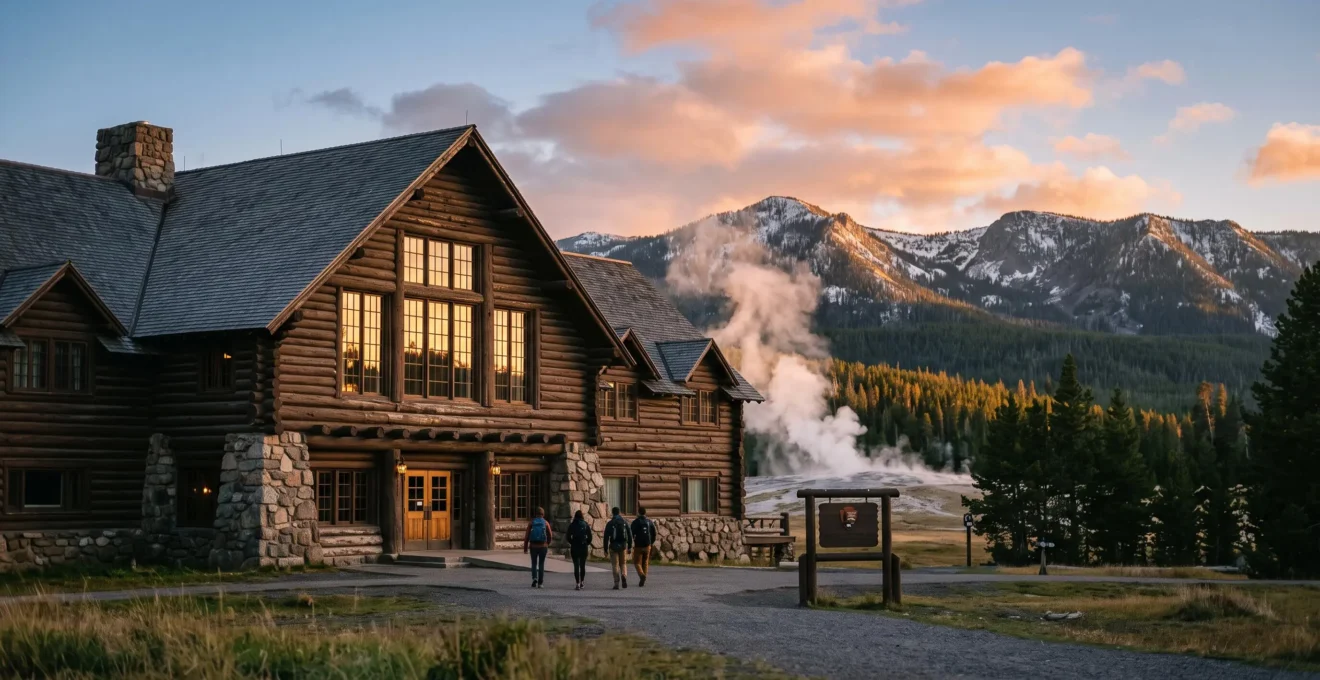
To wake up inside a national park is to experience it on a different plane of existence. It’s the quiet magic of watching the sunrise over the Grand Canyon from your balcony, or hearing the whisper of geysers from your room at the Old Faithful Inn. For any nature lover, securing a room in one of these historic lodges is a crowning achievement. Yet, many travelers are met with the same frustrating reality: “SOLD OUT” screens, bewildering booking windows, and a sense that they’ve missed a secret memo.
The common advice is often repeated: “book a year in advance,” “keep hitting refresh for cancellations,” “be flexible.” While true, this advice only scratches the surface. It treats the process like a flaw in a modern booking system, a problem to be hacked. But what if this challenge isn’t a flaw, but a feature? What if securing a room in these hallowed halls is less a transaction and more an initiation into a different pace of life? The difficulty stems from heritage scarcity—the simple fact that these are irreplaceable historic structures, not modern hotels designed for high turnover.
This guide is about more than just a booking strategy; it’s about embracing the philosophy of the national park lodge experience. It’s about seeking intentional disconnection in a world that’s always on. We will explore the rituals of booking, the reality of the stay, and the interconnected “reservation ecosystem” you must navigate. This is your true insider’s guide to not just getting a room, but understanding and cherishing what that room truly represents.
To help you master this unique form of travel, we’ve broken down the essential knowledge into key areas. This roadmap will guide you through the entire process, from the initial booking frenzy to fully appreciating the park without the crowds.
Summary: Mastering the Art of the National Park Lodge Stay
- Why be in front of your screen 13 months in advance to book?
- No TV or AC: why does historic charm mean less comfort?
- The “refresh” technique: how to get a canceled room at the last minute?
- The mistake of forgetting to book your table at the lodge restaurant (the only option for 30 miles)
- Why are the lobbies and fireplaces the real heart of the lodge experience?
- The mistake of thinking you can hike anywhere without a prior reservation
- Where to find free drinking water to avoid buying 50 plastic bottles?
- How to Experience Yellowstone Without the Crowds?
Why be in front of your screen 13 months in advance to book?
The frantic race to book a national park lodge room isn’t a technical glitch; it’s a direct consequence of their immense popularity and historic, limited inventory. These are not mega-resorts but protected pieces of American heritage. For premier locations run by concessionaires like Xanterra in Yellowstone, the booking window opens with clockwork precision. It’s a known fact that iconic lodges can book up 13 months in advance, especially for sought-after rooms at places like the El Tovar Hotel or Old Faithful Inn.
This “rolling” 13-month window is the gatekeeper. On the 5th of each month, the entire corresponding month of the *following year* becomes available. For example, on May 5th, 2024, all of May 2025 opens for booking. This system, while daunting, is designed to be fair, preventing a single chaotic opening day for the entire year. To succeed, you must treat it like an event. Know the exact date and time, understand the rules, and be prepared to act decisively. This isn’t just booking a room; it’s staking your claim on a piece of history.
To truly master this process, you need a clear plan of action. The rolling window has its own specific quirks and strategies that can give you an edge.
Your Action Plan: Navigating the 13-Month Rolling Window
- Mark the Calendar: The 5th of every month is your target. This is when the same calendar month of the following year opens for booking.
- Set Your Alarm (for Online Booking): Online reservations open at 12:00 a.m. Mountain Time (MT) on the 5th. This is your best and fastest chance for high-demand dates.
- Know the Phone Alternative: If you prefer calling, be aware that phone lines open later, at 7:00 a.m. MT on the same day. The most coveted spots will likely be gone by then.
- Leverage the “Continuous Stay” Rule: If your arrival date is in the newly opened month, you can book up to four additional consecutive nights that extend into the *next* month, even if that month’s window isn’t officially open yet. This is a powerful but little-known rule for securing a longer stay.
No TV or AC: why does historic charm mean less comfort?
The phrase “historic charm” is often a polite euphemism for a lack of modern amenities, and in many national park lodges, this is embraced as a core feature. When you book a room, you are not booking a contemporary hotel; you are stepping into a carefully preserved environment. In Yellowstone, for instance, policy dictates that no televisions, radios, or air conditioning are available in-park, with Wi-Fi being a rare and limited commodity. This isn’t an oversight; it’s a deliberate choice.
The philosophy is one of intentional disconnection. The goal is to encourage guests to disconnect from their devices and connect with the nature outside their window and the community inside the lodge. Instead of air conditioning, you open a window to the cool mountain air. Instead of a television, you have the theater of a sunset over the peaks or the communal buzz of the great hall. This rustic character is what separates a lodge stay from any other vacation.
This approach values authenticity over uniform comfort. As the Xanterra Travel Collection notes, the experience can vary widely. Some rooms may have shared bathrooms down the hall, reminiscent of the earliest days of park tourism, while others offer private baths and coffee makers. This is the trade-off you make for staying in a place with a soul.
Amenities vary. Some rooms use shared bathrooms. Other accommodations come with private baths, telephones, and coffee makers. Often, rooms do not have televisions or air-conditioning, although some may.
– Xanterra Travel Collection, Dos & Don’ts of Reserving a National Park Stay
The “comfort” you sacrifice in modern amenities is repaid tenfold in atmosphere and texture—in the grain of a century-old log wall or the radiant heat from a massive stone hearth.
This tactile sense of history is the luxury you are truly paying for. The worn floorboards and hand-hewn beams have witnessed generations of adventurers, and by staying here, you become a part of that continuing story. It’s an invitation to slow down and appreciate a different kind of quality.
The “refresh” technique: how to get a canceled room at the last minute?
So, you missed the 13-month window and every single room is booked. All hope is not lost. The second great secret to national park lodging is persistence. Cancellations happen constantly, opening up brief windows of opportunity for those who are watching. This is where the “refresh technique”—obsessively checking the online booking portal—comes into play, but it’s most effective when you understand the logic behind it.
The key is the cancellation policy itself. For many park concessionaires, there’s a critical deadline for getting a full refund. For example, under Xanterra’s policy for Yellowstone, a 30-day notice is required for a full deposit refund. This means a significant number of cancellations will cluster right around the 30-day mark before a given date. People’s plans change, and this is when they finally commit to canceling, releasing their long-held room back into the system. Other windows exist (e.g., 2-7 days before arrival for a partial refund), so availability can pop up at any time, but the 30-day mark is a prime hunting ground.
The strategy, then, is not just to refresh randomly, but to refresh with intent. Start by booking *something*, even if it’s a less-desirable cabin or a location further away. This gives you a foothold. Then, become a diligent student of the online system, checking frequently as your target dates approach, especially around that 30-day-out window. When a better room appears, grab it immediately, and then cancel your original backup reservation. It’s a dynamic game of chess, but one that frequently rewards the patient and prepared.
The mistake of forgetting to book your table at the lodge restaurant (the only option for 30 miles)
Securing the room is the first, most celebrated victory, but it’s a mistake to think the planning ends there. Many first-time visitors make a critical error: they assume that once they are in the lodge, other necessities like food will be readily available. In the remote heart of a national park, this is a dangerous assumption. You are part of a captive audience, and the historic dining room at your lodge might be the only food option for 30 or 50 miles in any direction.
This is the concept of the Reservation Ecosystem. Your room key doesn’t automatically grant you access to everything else. The same scarcity that applies to lodging often applies to dining and popular activities. The grand dining rooms at places like the Old Faithful Inn or El Tovar Hotel are destinations in themselves, with their own fierce competition for reservations. Waiting until you check in to think about dinner is a recipe for disappointment, often leaving you with only grab-and-go options or a long drive in the dark.
The principle of booking early and all at once is paramount. As soon as you confirm your lodging, your very next step should be to investigate and book your dining. As experts in park travel advise, you should bundle all your planning together to avoid missing out.
Book your desired activities, such as ranger-led programs, mule rides, or boat tours, at the same time as your lodging to avoid disappointment. Remember, more popular activities may need to be booked as early as reservations open.
– Xanterra Travel Collection, Dos & Don’ts of Reserving a National Park Stay
While this quote mentions activities, the logic applies with even greater force to dining. A mule ride is optional; eating is not. Think of your trip as a series of interconnected bookings. Your goal is to secure your entire itinerary—lodging, dining, and key tours—in that initial wave of planning. Don’t let a logistical oversight spoil the magic of your stay.
Why are the lobbies and fireplaces the real heart of the lodge experience?
After a day of exploring majestic landscapes, you might assume the private sanctuary of your room is the ultimate prize. In reality, the most memorable moments of a national park lodge stay often happen outside your room, in the grand, communal spaces that form the building’s soul. The lobbies, the vast stone fireplaces, and the sprawling porches are not just transitional areas; they are the communal hearth of the park experience.
This is a direct result of the “intentional disconnection” built into the lodge’s DNA. With no television to retreat to and often spotty Wi-Fi, guests are gently nudged out of their private quarters and into these shared environments. The magnificent lobby of the Old Faithful Inn, with its soaring timber structure and massive rhyolite fireplace, was explicitly designed to be the center of social life. It’s a space that invites you to linger, to read a book in a worn leather armchair, to play a board game, or simply to watch the ever-changing cast of fellow travelers.
Here, around the crackling fire, a unique form of social interaction unfolds. Strangers become temporary neighbors, swapping stories of their day’s adventures. You’ll hear tales of a bison sighting in Lamar Valley, get tips on a lesser-known trail, or share a moment of collective awe as you listen to a ranger’s evening talk. This is where the community of the park is forged. The grand lobby is the living room you all share, and the fireplace is the television, broadcasting a constant, mesmerizing show of warmth and light. To retreat to your room for the evening is to miss the main event entirely.
The mistake of thinking you can hike anywhere without a prior reservation
The “Reservation Ecosystem” extends far beyond the lodge walls, reaching into the very trails and viewpoints you came to see. The days of spontaneously deciding to tackle a park’s most famous hike are rapidly disappearing. Just as lodges have limited capacity, so do the most fragile and popular ecosystems. To manage human impact and preserve the quality of the experience, parks are increasingly turning to permit and lottery systems for their crown-jewel trails.
This shift can be a shock to visitors who assume a park entrance fee grants them unrestricted access. The reality is that for iconic hikes like Angels Landing in Zion, Half Dome in Yosemite, or even access to certain areas like Glacier’s Going-to-the-Sun Road, an advance reservation is mandatory. The scale of these programs is staggering; for example, Zion National Park issues more than 200,000 Angels Landing permits each year through a competitive lottery. This isn’t about creating barriers; it’s about saving these places from being loved to death.
As park officials explain, these systems are a necessary response to overwhelming demand. They are designed to protect the natural resources and ensure a safer, less crowded, and more enjoyable experience for those who do get a permit. It’s a fundamental change in how we must approach park visitation.
We’ve issued hundreds of thousands of permits to hike to Angels Landing since the program began in 2022. Visitors and rangers report that the program has been successful at reducing crowding and congestion.
– Jeff Bradybaugh, Zion National Park Superintendent, NPS News Release, 2024 Angels Landing Pilot Permit Program
Therefore, your trip planning must include a “recreational research” phase. Identify the must-do hikes and activities on your list, and then investigate their permit requirements immediately. Note the lottery dates, application fees, and deadlines in your calendar, just as you did for your lodging. In the modern national park, a successful adventure is a well-planned one.
Where to find free drinking water to avoid buying 50 plastic bottles?
In the grand theater of a national park, it’s easy to overlook a simple, yet profound, act of conservation: how you drink water. The old habit of buying cases of single-use plastic water bottles is not only wasteful but increasingly at odds with the parks’ core mission of preservation. The sheer volume of plastic waste is a significant challenge, and parks are actively encouraging visitors to be part of the solution.
The good news is that parks are making it easier than ever to do the right thing. Across the country, a quiet revolution is taking place with the installation of water bottle refilling stations. These stations, often located at visitor centers, major trailheads, and lodges, provide free, clean, and often chilled potable water. By simply carrying a reusable bottle, you can save money, reduce your environmental footprint, and align yourself with the spirit of stewardship. The impact is enormous; by installing refill stations and promoting reusables, Zion saved 60,000 water bottles, or 5,000 pounds of plastic waste, in a single initiative. Similarly, Grand Canyon has installed dozens of stations to combat waste.
Being a responsible park visitor means preparing for this. Your pre-trip checklist should include packing a good reusable water bottle for every member of your group. Here’s how to make the most of the park’s refilling infrastructure:
- Bring the Right Gear: Start with one primary reusable bottle per person. For longer hikes, consider adding a collapsible water bladder that takes up minimal space when empty.
- Locate the Stations: As soon as you arrive, check the park map or ask a ranger to point out the designated filling stations. They are typically found in high-traffic areas like visitor centers, museums, and lodges.
- Have a Backup Plan: If you forget your bottle, don’t default to plastic. Park gift shops and bookstores now often sell branded reusable bottles as souvenirs—a practical and supportive purchase.
- Recycle Properly: If you must use a plastic bottle, make sure it ends up in a recycling bin, not a trash can. Parks provide these bins for a reason.
Embracing the reusable bottle is more than a practical tip; it’s a symbolic act. It demonstrates a commitment to the “leave no trace” ethic and helps ensure these pristine landscapes remain pristine for generations to come.
Key takeaways
- Booking is a marathon, not a sprint: Understand and be prepared to use the 13-month rolling window to your advantage.
- Embrace the “inconveniences”: A lack of modern amenities like A/C or TV is a deliberate feature designed for immersion and community.
- Plan for the whole ecosystem: Your room reservation is just the start; book dining, popular hikes, and key activities at the same time.
How to Experience Yellowstone Without the Crowds?
You’ve navigated the booking system, embraced the rustic charm, and planned your entire reservation ecosystem. Your final, and perhaps greatest, reward is the strategic advantage your lodge stay gives you in experiencing the park itself: the ability to escape the crowds. The biggest complaint about popular parks like Yellowstone is the congestion, the traffic jams, and the crowded boardwalks. Staying inside the park is your golden ticket to sidestepping the worst of it.
The secret is simple: be where the crowds aren’t. The vast majority of visitors are day-trippers who operate on a predictable schedule, entering the park around 9 a.m. and leaving by 4 p.m. This creates a “peak congestion” window in the middle of the day. Your mission is to operate outside of these hours. By staying in the park, you can easily be at the most iconic spots at dawn and dusk, times when you’ll have them almost to yourself. As one expert source puts it, your location is your greatest asset.
Staying inside the park or just outside an entrance makes it much easier to get out early and stay out later.
– Road Trip Locals, How to Avoid Crowds in Yellowstone (Without Missing the Best Spots)
A successful crowd-avoidance strategy involves inverting the typical tourist itinerary. Instead of rushing to Old Faithful at noon with thousands of others, go at sunrise when the steam is thick in the cold air and the boardwalks are empty. During the midday peak, escape to lesser-known areas, take a long lunch back at the lodge, or explore a quieter trail. Save the main attractions for the golden hours of late afternoon when the tour buses have departed for the day. This dawn-and-dusk itinerary is the ultimate park lodge perk.
Here is a simple but powerful itinerary to follow:
- Sunrise Spectacles: Visit iconic thermal spots like Old Faithful and the Grand Prismatic Spring at sunrise. The boardwalks are nearly empty, and the steam against the cool morning air is at its most dramatic.
- Golden Hour Glory: Explore major sites like the Grand Canyon of the Yellowstone during the late afternoon’s golden hour, after the day’s tour buses have cleared out and the light is magical.
- Midday Retreat: During the 9 a.m. to 3 p.m. peak window, avoid the main hubs. Instead, head to quieter areas like the east side of Yellowstone Lake for a picnic, or even a nap back at your lodge.
- Time Your Visits: In short, schedule your visits to the most famous attractions for either early morning (before 9 a.m.) or late afternoon (after 3 p.m.) to find quieter paths and better light.
Now that you have the keys to both booking a room and understanding its unique spirit, the next step is to open that 13-month calendar and begin your own journey into the heart of America’s national parks.