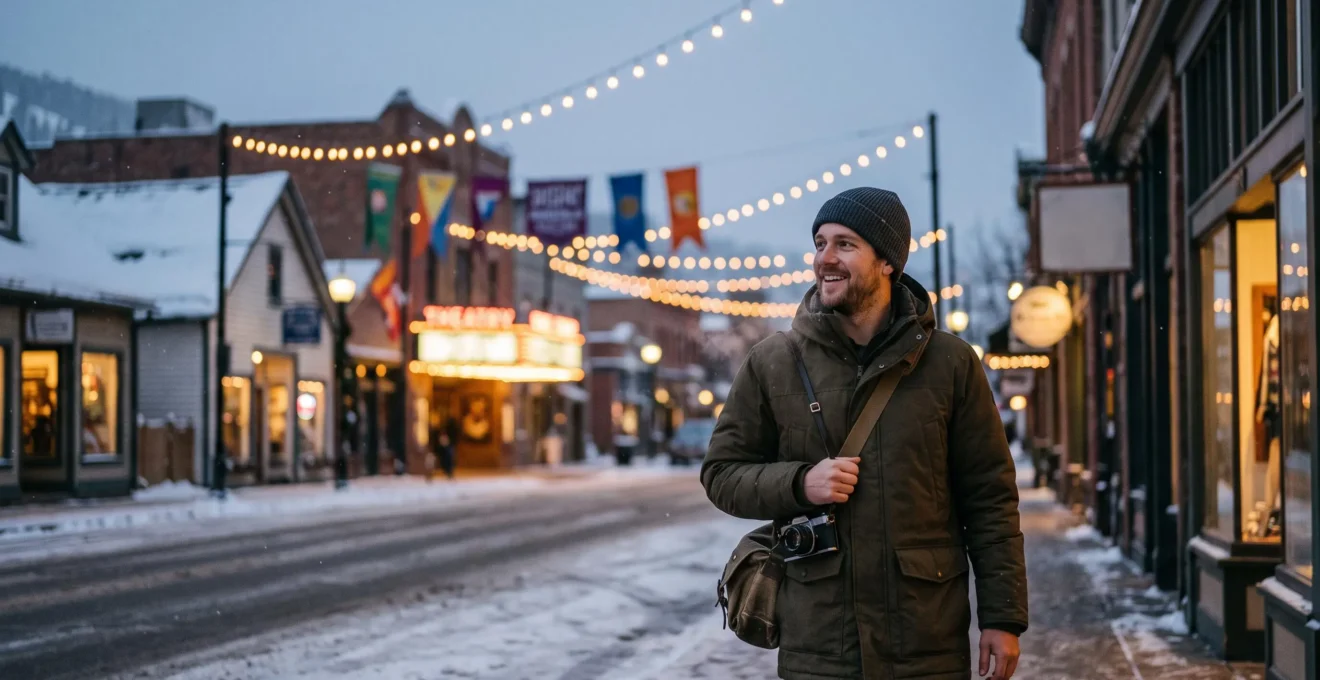
Attending a top-tier film festival without industry credentials is less about who you know and more about mastering the insider’s playbook.
- Success hinges on strategic planning for high-demand tickets and embracing backup options like physical rush lines.
- The true value lies in discovering hidden gems within shorts programs and respecting the unwritten rules of fan-creator interactions.
Recommendation: Prioritize logistical strategy and cinematic discovery over glamour and celebrity chasing to have an authentic and rewarding festival experience.
The annual announcement of the Sundance or Tribeca lineup sends a familiar thrill through the heart of any true cinephile. It’s a glimpse into the future of film, a catalog of stories waiting to be discovered. The immediate dream is to be there—in the electric atmosphere of a world premiere, breathing the same rarefied air as the next great auteurs. But for the average fan without an industry pass, that dream can feel distant, obscured by a confusing fog of ticketing lotteries, sold-out screenings, and the sheer scale of it all. The common advice to “buy tickets early” and “book a hotel” barely scratches the surface of the logistical and social ballet required.
Most guides talk about the what, not the how. They tell you to see films, but not how to navigate the heartbreaking reality of a “Sold Out” notice. They mention Q&As, but not the unspoken etiquette that separates a thoughtful fan from a cringeworthy monologuist. They talk about the glamour, but not the practical realities of Park City’s icy streets or the marathon of walking between venues in Lower Manhattan. This is where the insider’s game begins, a set of unwritten rules and strategies that can transform a frustrating trip into a magical cinematic pilgrimage.
But what if the key wasn’t just getting a ticket, but knowing how to play the entire game? This guide is your insider debriefing. We’re moving beyond the basics to give you the actionable tactics for navigating the chaos, finding the real cinematic treasures, and experiencing these festivals like a seasoned pro, not a wide-eyed tourist. We’ll even explore how that same passion for film can lead to a different kind of behind-the-scenes magic in the heart of Hollywood itself.
This article provides a complete roadmap for the dedicated film fan. From mastering the digital waitlist to understanding the practicalities of festival fashion and uncovering the most rewarding screenings, you’ll find the essential strategies to make your festival dream a reality.
Summary: Your Complete Guide to Experiencing Film Festivals and Studio Tours
- Waitlist: How Does the Electronic Line Work for Sold-Out Films?
- The Mistake of Monologuing Instead of Asking the Director a Question
- Park City Main Street: Where to Spot Stars Incognito During Sundance?
- Snow Boots and Puffer Coats: Why Glamour Has No Place on the Street at Sundance?
- Why Short Film Programs Are Often the Festival’s Hidden Gems
- Why the Visit to the Accessories Department at Warner is a Must-See?
- The Mistake of Not Booking Your Time Slot 2 Weeks in Advance
- Warner Bros or Universal Studios: Which Tour Shows Real Moviemaking?
Waitlist: How Does the Electronic Line Work for Sold-Out Films?
There is no more deflating phrase for a festival-goer than “Sold Out.” But at Sundance and Tribeca, this is often the beginning of a strategic game, not the end of the road. Both festivals utilize an electronic waitlist system via their official apps, typically allowing you to check in for a virtual spot about two hours before a screening begins. This system is your first and best chance. You select the film, join the queue, and receive a number. Then, you head to the theater and wait for the staff to start calling numbers, usually 15-20 minutes before showtime. It’s a digital lottery, but one that rewards persistence.
However, technology can be fickle, and app-based waitlists fill up in seconds for high-profile films. This is where the old-school, analog strategy becomes essential: the Rush Line. This physical queue of non-ticket-holders is the ultimate backup plan. As a veteran Sundance attendee explains, this strategy is all about commitment. Arriving early to be near the front of the physical line is critical; staff fill any and all remaining seats from this queue after ticket holders are seated. Latecomers rarely succeed, but those willing to brave the cold and wait patiently are often rewarded with a seat. It’s a testament to the festival spirit, where passion and perseverance can get you into the hottest screening of the year.
This dual-pronged approach—digital diligence combined with physical presence—is the core of the waitlist game. Don’t be discouraged by a sold-out status; see it as a challenge to be met. As one festival veteran succinctly put it in a report for Los Angeles Magazine, when it comes to the e-waitlist, you have to be ready to play the game, but it’s a game that can be won. The system does work, for those who work the system.
Embracing this challenge is the first step to experiencing the festival like an insider.
The Mistake of Monologuing Instead of Asking the Director a Question
The post-screening Q&A is a sacred space in the festival world. It’s a rare, intimate bridge between the creator and the audience, a chance to delve deeper into the art you’ve just experienced. However, it is also a minefield of social faux-pas, with one cardinal sin standing above all others: the monologue disguised as a question. Every festival veteran has witnessed it—the person who takes the microphone not to ask a question, but to share a long personal story, pitch their own project, or deliver a fawning, multi-minute compliment. This is a rookie mistake that wastes precious time and derails the conversation for everyone.
As indie filmmaker and Sundance guide Dylan Kai Dempsey bluntly advises, this is the moment for brevity and focus.
So please DON’T spend a minute gushing about a film, or share a story about your cousin, or talk about your own project.
– Dylan Kai Dempsey, The Art of Sundance: Beginner’s Guide To The Festival
The goal is to engage in a dialogue, not to perform a soliloquy. The filmmakers are often on a tight schedule, especially in shorts programs where several directors share the stage. A well-formulated, concise question respects their time and the curiosity of the entire audience. The filmmaker’s own experience confirms this; a documentary director noted how the best Q&As feel like a genuine, energetic exchange, which is impossible when an audience member hijacks the microphone.
Your Action Plan: How to Ask a Killer Q&A Question
- Frame the question clearly: Identify the core of your curiosity. Is it about a character’s motivation, a specific creative choice, or the film’s theme? Start there.
- Keep it succinct: Aim for a question that can be asked in 30 seconds or less. Write it down on your phone if you need to.
- Avoid personal anecdotes: Your question should be about the film, not about you. Find the real question underneath your personal connection or compliment.
- Make it a question: Ensure your statement ends with a question mark. “I loved how you used color, it reminded me of my childhood…” is a comment. “What was your philosophy behind the color palette?” is a question.
- Listen to other questions: Avoid asking something that has already been answered. Pay attention to the flow of the conversation.
By asking a thoughtful, direct question, you not only get a better answer but also elevate the experience for everyone in the room.
Park City Main Street: Where to Spot Stars Incognito During Sundance?
For many first-timers, part of the Sundance allure is the possibility of a celebrity sighting. The fantasy is a red-carpet moment, but the reality is far more subtle and, frankly, more interesting. The key to spotting stars at Sundance or Tribeca isn’t about camping out by the main theaters; it’s about understanding the rhythm of the festival. Celebrities are there to work, promote their films, and see other movies, just like you. Your best chance for an encounter is in the “in-between” moments and places.
In Park City, Main Street is the epicenter of this activity. However, don’t look for entourages and flashbulbs. Instead, look for people in high-quality (but practical) winter gear, often with their heads down and moving with purpose. The most common sightings happen in the most mundane places: grabbing coffee at Java Cow, browsing the racks at a boutique, or even waiting for a shuttle bus. The environment fosters a certain level of casual anonymity. As a case study of local Park City residents reveals, these brief, memorable celebrity moments have been a part of the festival’s fabric for decades, happening in ordinary settings like restaurants and private rentals far more often than at staged events.
The same principle applies to Tribeca in New York City. The areas around the main venues, like Spring Studios or the Borough of Manhattan Community College (BMCC), become temporary hubs. A quiet café in the surrounding neighborhood is a more likely spot for a low-key encounter than the chaotic lobby of a premiere. The unwritten rule, if an encounter does happen, is to be respectful and brief. A local photographer’s code of conduct is a perfect guide: always ask permission for a photo, keep the interaction short, and have your camera ready to not waste their time. The goal is a respectful nod of appreciation, not a frantic fan moment.
Ultimately, the most rewarding sightings are the ones that feel natural, a shared moment in a town temporarily consumed by the love of cinema.
Snow Boots and Puffer Coats: Why Glamour Has No Place on the Street at Sundance?
One of the biggest misconceptions about attending Sundance is the dress code. Images of celebrities on red carpets can create the illusion of a glamorous, high-fashion event. This is a dangerous fantasy. On the actual streets of Park City, practicality is the only fashion that matters. The festival is a marathon of walking, standing in line, and navigating streets covered in snow and ice. The person in stilettos and a thin trench coat isn’t seen as chic; they’re seen as a rookie who made a terrible mistake.
The foundation of any Sundance outfit is footwear. It is non-negotiable. As Jackie Barton, an Associate Director at the Sundance Institute, explicitly advises, function must come first.
Go for waterproof, low-heeled boots that hit at least mid-calf (or higher), and make sure the soles provide good traction.
– Jackie Barton, Associate Director of Marketing, Sundance Institute, How to Dress for Success — and Warmth — at the Sundance Film Festival
This isn’t just about comfort; it’s about safety and endurance. A typical Sundance day involves trekking between theaters, which can be surprisingly far apart. You will be on your feet for hours, often in freezing temperatures. The right boots will keep you warm, dry, and stable, allowing you to focus on the films, not your aching, frozen feet. The same logic applies to outerwear: a warm, insulated puffer coat is your best friend. Layering is key, as theaters can be warm, but the wait outside is always cold.
While Tribeca in the spring doesn’t involve snow, the principle of the “festival marathon” holds true. You’ll be walking miles across Manhattan, and comfortable shoes are just as critical. The vibe is more “city chic” than “mountain survival,” but the core rule is the same: choose function over high fashion. A stylish but comfortable sneaker will serve you infinitely better than a pair of brand-new, unbroken-in dress shoes.
Dressing like a seasoned insider means prioritizing warmth and mobility, saving the glamour for the after-parties, if you happen to attend any.
Why Short Film Programs Are Often the Festival’s Hidden Gems
In the frantic rush to score tickets for the big-name features and star-studded premieres, it’s easy to overlook what is arguably the heart and soul of a festival like Sundance or Tribeca: the short film programs. These curated blocks of shorts are not just filler; they are often the most potent, innovative, and surprising cinematic experiences available. To skip them is to miss out on the very essence of film discovery.
The sheer selectivity of these programs is staggering. For instance, a recent Sundance festival showcased just 57 films from 28 countries, selected from over 11,000 submissions. This means every single film you see in a shorts block has survived an incredibly rigorous curation process. You are watching the absolute cream of the crop, a concentrated dose of creativity from emerging voices around the globe. In a single 90-minute screening, you can journey through animation, documentary, experimental narrative, and comedy, experiencing a wider range of styles and stories than in any single feature.
Furthermore, these programs are a proven launchpad for the next generation of great filmmakers. The list of Sundance shorts alumni reads like a who’s who of modern independent cinema. As the institute itself proudly notes, directors like Damien Chazelle (“La La Land”), the Duplass Brothers (“The Puffy Chair”), and Destin Daniel Cretton (“Short Term 12”) all cut their teeth in the Sundance shorts program. By attending these screenings, you are not just watching a film; you are potentially witnessing the birth of a major career. It’s a chance to be in on the ground floor and to be able to say, “I saw their work way back when.”
Forgo the hype of one big premiere for the guaranteed discovery of a half-dozen brilliant new talents. It’s the smartest and most rewarding play at any festival.
Why the Visit to the Accessories Department at Warner is a Must-See?
While film festivals offer an immersion into the present and future of cinema, another pilgrimage offers a tangible connection to its iconic past: the Hollywood studio tour. For the true cinephile, a visit to the Warner Bros. Studio Tour Hollywood is essential, and the undisputed highlight is the prop department, known as the “Prop House.” This isn’t a museum display behind glass; it’s a living, working warehouse where the physical objects that built fantasy worlds are stored.
Seeing this department is a must because it transforms abstract movie magic into something you can almost touch. It’s one thing to see Batman’s cowl or Harry Potter’s wand on screen; it’s another entirely to stand a few feet away from the actual, screen-used items. You can see the intricate details of the One Ring, the variety of blasters from *Blade Runner*, or the furniture from the Central Perk set of *Friends*. This experience provides a profound appreciation for the craftsmanship and artistry that goes into every single film. It’s a reminder that these epic stories are built not just with pixels, but with wood, paint, metal, and immense skill.
This is what makes the visit so compelling. It demystifies the filmmaking process while simultaneously deepening your reverence for it. You see rows upon rows of chairs, lamps, and artifacts, each waiting for its turn in a new story. It connects the dots between a century of cinematic history, from classic Hollywood to modern blockbusters, all housed under one roof. For a fan, it’s the closest you can get to walking through the physical memory of cinema itself.
It’s an essential experience that enriches your understanding of how the stories you love are brought to life.
The Mistake of Not Booking Your Time Slot 2 Weeks in Advance
Unlike the game of chance that often defines getting festival tickets, securing a spot on a premier studio tour like Warner Bros. or Universal Studios is a game of pure planning. The single biggest mistake a visitor can make is assuming they can simply show up and buy a ticket. This is especially true during peak seasons like summer, spring break, or holidays. These tours operate on a timed-entry system, and slots sell out days, if not weeks, in advance.
Failing to book your specific time slot at least two weeks out is a recipe for disappointment. Imagine traveling all the way to Burbank or Universal City, filled with anticipation, only to be met with a “Sold Out For Today” sign at the entrance. It’s a completely avoidable scenario. Booking ahead online is not merely a suggestion; it’s a requirement to guarantee your entry. It allows you to choose the time that best fits your itinerary and ensures your spot on the tram.
This advance planning also provides a strategic advantage. Morning slots are often less crowded, offering a slightly more intimate experience before the midday rush. By securing your time in advance, you can structure your entire day in Los Angeles around this central event, rather than leaving it to chance. The peace of mind that comes with having your ticket confirmed is invaluable and allows you to simply look forward to the experience. In a city where logistics can be challenging, locking in this one key activity is a smart traveler’s move.
Treat your studio tour booking with the same urgency you would a flight—it’s the anchor of your Hollywood cinephile experience.
Key takeaways
- Festival success is about strategy over luck, especially when using digital waitlists and physical rush lines.
- Practicality trumps glamour; proper footwear and warm clothing are non-negotiable for endurance and enjoyment at Sundance.
- The best cinematic discoveries are often found in the highly-curated short film programs, which showcase future talent.
- Proper Q&A etiquette (asking a concise question, not monologuing) is a sign of a respectful and seasoned festival-goer.
Warner Bros or Universal Studios: Which Tour Shows Real Moviemaking?
For cinephiles visiting Los Angeles, the choice between the Warner Bros. and Universal Studios tours is a common dilemma. Both promise a peek behind the curtain, but they offer fundamentally different experiences. The answer to “which tour shows real moviemaking?” depends entirely on your definition of the term. Are you looking for the craft and history, or the spectacle and entertainment?
The Warner Bros. Studio Tour Hollywood is widely considered the cinephile’s choice. It is a more intimate, quieter, and craft-focused experience. The tour takes you through actual working backlots and soundstages where productions might actively be filming. There’s a strong emphasis on the history of the studio and the artistry involved, with extended stops in the Prop House and the Batcave archives. The feel is more akin to a guided visit through a working piece of film history. You are an observer of the process.
The Universal Studios Hollywood tour, by contrast, is a hybrid of a working studio and a theme park. While it does take you through a massive and historic backlot—with famous sets from *Jaws*, *Psycho*, and *Back to the Future*—the experience is heavily entertainment-driven. The tour incorporates elaborate, built-in attractions like the King Kong: 360 3-D and Fast & Furious – Supercharged segments. It shows you “moviemaking” as a thrilling spectacle. You are a participant in the magic.
So, which is for you?
- Choose Warner Bros. if: You are passionate about the craft of filmmaking, want a quieter and more detailed look at props and sets, and prefer a more historical, educational tone.
- Choose Universal Studios if: You are looking for a high-energy entertainment experience that combines a real studio tour with theme park-style thrills and big-name blockbuster attractions.
Whether you’re chasing the next indie hit at Sundance or walking through Hollywood history at Warner Bros., the key is to go in with a plan. Start mapping out your ultimate cinephile journey today by exploring the official festival and studio tour websites for the most up-to-date information.