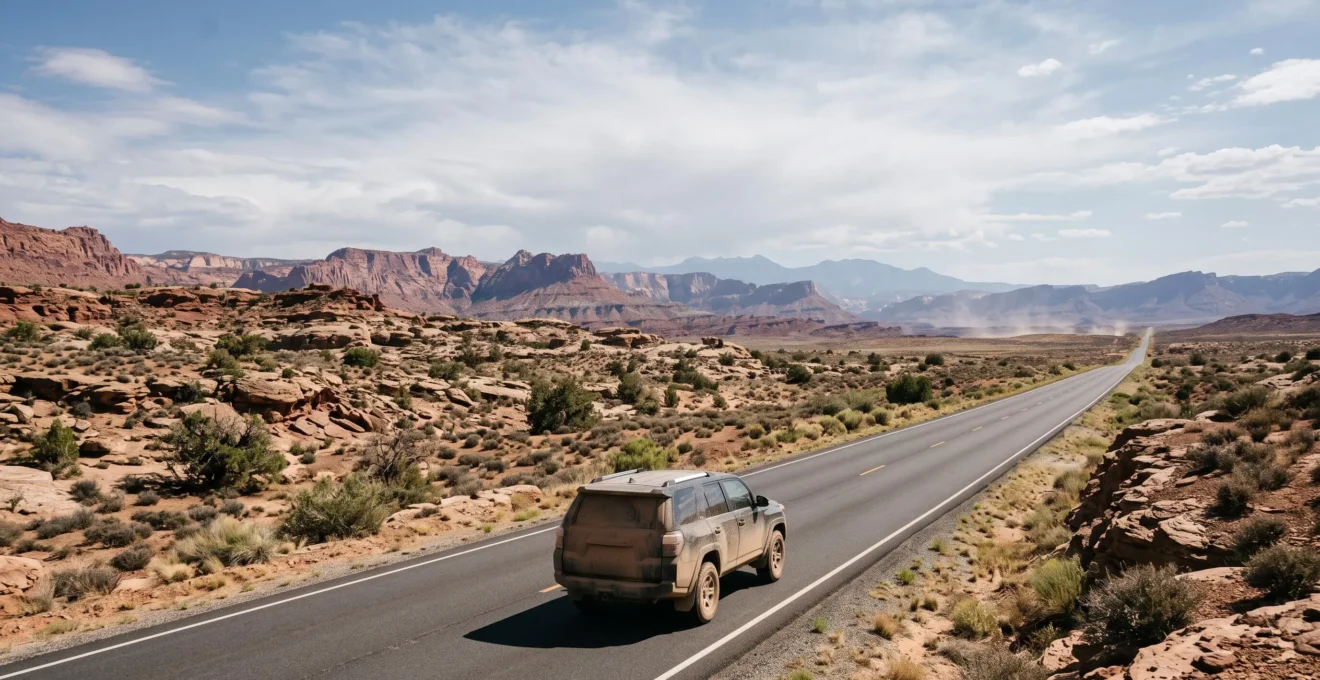
Your biggest risk in the US Southwest isn’t an animal or getting lost; it’s your European perception of “hot,” which is dangerously inadequate for this environment.
- Dehydration is not just thirst; it’s a rapid cognitive failure that begins long before you notice it.
- A rental car is not a convenience; it’s a fragile lifeline whose most common failure point—tires—can be a death sentence.
- The desert heat is not just in the air; the ground itself becomes a cooking surface, making midday activity a fatal error.
Recommendation: Treat this guide not as travel advice, but as a mandatory, non-negotiable survival protocol. Your life depends on it.
Listen carefully. You are planning a trip to one of the most beautiful and hostile environments on Earth. As a park ranger, I have seen the awe on the faces of visitors, and I have also coordinated the rescues—and recoveries—of those who underestimated this landscape. Your idea of a hot summer day in Europe is a pleasant afternoon. Here, that same temperature, combined with extreme dryness and remoteness, creates a life-threatening situation where the margin for error is zero. Forget what you think you know about heat.
Common advice talks about sunscreen and hats. That is rudimentary. We need to talk about the physics of survival: the rate at which your body loses water versus its ability to absorb it, the exponential aging of rubber in extreme heat, and the physiological shutdown that begins when you ascend too quickly from sea level. This is not a travel blog offering friendly tips. This is a briefing on your operational procedures. Your goal is not just to see the desert, but to survive it. Pay attention, because the rules that follow are not suggestions; they are the baseline for returning home safely.
This guide provides a structured protocol for navigating the primary threats of a Southwest road trip. Each section addresses a critical failure point, from physiological limits to mechanical integrity. Understanding and obeying these directives is your primary responsibility.
Table of Contents: A Survival Protocol for the American Desert
- Why 4 litres of water per person are the minimum vital in hiking?
- How to check your car rental before entering Death Valley?
- Dawn or dusk: what is the best time to avoid heatstroke?
- The mistake of wanting to touch the local fauna (scorpions, snakes) for a photo
- Technical clothing or cotton: what to wear to survive the dry heat?
- Why you risk violent headaches as soon as you reach 2500 metres in altitude?
- Beyond the burger: what fast-food chains offer real salads?
- How to Hike High-Altitude US Trails Safely Coming from Sea Level?
Why 4 litres of water per person are the minimum vital in hiking?
Let’s be clear: water is not about quenching thirst. It is about maintaining core bodily functions. In the dry desert air, your body can lose water by sweating at a rate of up to 1.4 liters per hour. However, your body has a critical limitation: it can only absorb water at a rate of about 1.2 liters per hour. This means that once you start to fall behind on hydration, it is physiologically impossible to “catch up.” Thirst is the last and most unreliable indicator; by the time you feel thirsty, you are already in a state of dehydration, and your cognitive functions are degrading.
The official recommendation is not an arbitrary number. It is a baseline calculated for survival. A minimum of one gallon (approximately 4 liters) of water per person per day is the standard set by the National Park Service for a reason. This is for a normal day, not even a day involving strenuous hiking. A tragic case study from the Grand Canyon involved a couple who carried only 3 liters each for a two-day hike in over 100°F (38°C) heat. By the second day, both were suffering from severe dehydration and impaired judgment. An analysis concluded their actual requirement for those conditions was closer to 9 liters per person, per day. Do not make their mistake.
You must drink continuously, about one liter per hour, even when you do not feel thirsty. Gulping large amounts at rest stops is inefficient and can even lead to hyponatremia (water intoxication), a dangerous condition where sodium levels in your blood become diluted. Your water strategy must be proactive, not reactive.
- Your body sweats out 0.8 to 1.4 liters per hour under desert conditions.
- Your body can only absorb 0.8 to 1.2 liters per hour.
- You cannot “catch up” once dehydration sets in.
- Strategy: Sip water constantly. Target one liter per hour of intake.
How to check your car rental before entering Death Valley?
Your rental vehicle is not a car. In the desert, it is your mobile life-support system. A breakdown is not an inconvenience; it is a life-threatening emergency in a location with no cell service and extreme temperatures. While you should check the air conditioning and fluids, your primary focus must be on the tires. Tire blowouts are the most common cause of vehicle-related emergencies in desert parks.
The intense radiant heat from asphalt combined with high air temperatures is incredibly destructive to rubber. This is why experts note that tires in hot desert climates age approximately 2.5 times faster than in temperate zones. A rental car may have tires that look fine but are structurally compromised by age and heat exposure. You must personally inspect them. Do not trust that the rental company has done this for you.
Your Pre-Departure Tire Integrity Audit
- Locate the DOT Code: Find the “DOT” stamp on each tire’s sidewall. You may need to turn the steering wheel to see the inner-facing side. Use a flashlight if needed.
- Isolate the Date: Ignore the long string of characters. Focus only on the final four digits. This is the manufacturing date.
- Decode the Date: The first two digits represent the week of manufacture (01-52), and the last two represent the year. A code of “1522” means the tire was made in the 15th week of 2022.
- Assess the Age: Any tire older than six years is a significant risk. If a tire’s code is “xx18” or earlier, you should be extremely cautious or request a different vehicle.
- Check for Wear and Pressure: Beyond age, look for visible cracks, bulges, and ensure the tire pressure matches the recommendation on the sticker inside the driver’s door.
This table, summarizing industry guidelines, shows why a tire over six years old is a liability. Your rental car in Las Vegas or Phoenix is subjected to these extreme conditions daily.
| Guideline Source | Recommended Inspection Age | Recommended Replacement Age |
|---|---|---|
| Vehicle OEMs (e.g., Ford, Chrysler) | N/A | 6 years |
| General tire industry consensus | Around 6 years | Up to 10 years |
| Pre-2000 tires (3-digit code) | Immediate | Already past service life |
Dawn or dusk: what is the best time to avoid heatstroke?
Your choice of when to be active is as critical as how much water you carry. The desert sun is a relentless force, and heatstroke is a swift and silent killer. The danger is not just the air temperature you see on a forecast. It is compounded by radiant heat from the ground, which can be 30-40°F (15-20°C) hotter than the air. At midday, you are essentially walking on a cooking surface.
The only safe times for strenuous activity like hiking are the very early morning hours, starting before sunrise, or in the late evening after the sun has dropped below the canyon walls. All activity must cease between 10 a.m. and 4 p.m. This is not a suggestion. In August 2021, a 60-year-old hiker died from suspected heat stroke in Death Valley. Park staff received the report at 1:40 p.m., a time when no one should be on a trail. His death underscores the lethal reality of daytime desert hiking.
The initial signs of heat exhaustion—a precursor to heatstroke—include heavy sweating, faintness, dizziness, fatigue, and a weak, rapid pulse. If you feel any of these, you must stop immediately, find shade, and cool down. But the goal is to never let it get to that point. Plan your days around the sun. Your hikes are sunrise missions or sunset excursions, never midday ordeals.
The golden hours of dawn and dusk are not just for photographers; they are your survival windows. The light is beautiful, but more importantly, the temperatures are manageable. All other hours are off-limits for exertion. Respect this schedule as if your life depends on it, because it does.
The mistake of wanting to touch the local fauna (scorpions, snakes) for a photo
The wildlife of the desert is part of its allure, but it is not a petting zoo. These animals are survivors, adapted to a harsh world, and they will defend themselves. The critical mistake is not just approaching them, but failing to be constantly aware of their presence. The danger is not that a rattlesnake is aggressive, but that you will step on it without seeing it.
Your primary directive is to maintain situational awareness. This means you never put your hands or feet where you cannot see. Do not reach under rocks, into crevices, or blindly grab firewood. Before putting on boots that have been left outside, shake them out vigorously. Rattlesnakes, scorpions, and black widow spiders are common and seek shade in the same places you might.
The issue is not just the venom, but your location. A snakebite that would be a treatable emergency in a city becomes a life-threatening crisis when you are two hours from the nearest hospital with no cell signal. The goal is 100% avoidance. Give all wildlife a wide berth. A photo is not worth your life. Use a zoom lens if you must, but maintain a safe distance at all times.
- Be constantly aware of rattlesnakes, scorpions, and spiders.
- Rule #1: Do not put your hands or feet where you cannot see them.
- Check boots and bags before use if they have been left on the ground.
- Always carry a reliable navigation device; getting lost off-trail increases your risk of an unexpected encounter.
Technical clothing or cotton: what to wear to survive the dry heat?
Your clothing is your personal, mobile shade. In the desert, the “less is more” approach is a dangerous mistake. Exposing skin to the intense sun accelerates dehydration and invites severe sunburn. The correct approach is to cover up with the right materials.
There is a saying among outdoor professionals: “cotton kills.” In cold, wet conditions, this is because cotton loses all insulating properties. In hot, dry conditions, it’s dangerous for a different reason. Cotton absorbs sweat and holds it against your skin, clinging and blocking airflow. It becomes a heavy, wet, and inefficient layer that prevents the evaporative cooling process your body relies on to regulate its temperature.
You must wear light-colored, loose-fitting, long-sleeved shirts and pants made from synthetic technical fabrics (like polyester or nylon) or merino wool. These materials do not absorb moisture; they wick it away from your skin and spread it across the surface of the fabric, where it can evaporate quickly and efficiently, creating a cooling effect. Light colors reflect solar radiation, while dark colors absorb it. A wide-brimmed hat is not optional; it is essential to protect your face, neck, and ears.
Think like the people who have lived in these environments for centuries: they cover themselves from head to toe. Your clothing is a tool for survival. Do not treat it as a fashion choice. Choose function, choose coverage, and choose technical fabrics.
Why you risk violent headaches as soon as you reach 2500 metres in altitude?
Many of the Southwest’s most iconic parks, from the Grand Canyon’s rim to Zion’s high plateaus, are at a significant elevation. For a traveler coming from sea level in Europe, the altitude itself is a serious and often overlooked threat. Acute Mountain Sickness (AMS) is a physiological response to the lower oxygen levels at high altitude, and it can begin at elevations as low as 8,000 feet (about 2,500 meters).
The most common initial symptom is a severe, throbbing headache, often accompanied by nausea, fatigue, and dizziness. This is not a simple travel headache; it is a sign that your brain is not getting the oxygen it is accustomed to. Ignoring it is a grave error. The prevalence of AMS is not trivial; a large-scale review found that for every 1,000-meter increase above 2,500 meters, there was a 13% increase in AMS prevalence. Your body needs time to acclimatize. Flying from London to Las Vegas and driving straight to the Grand Canyon’s North Rim (8,297 ft / 2,529 m) to go for a strenuous hike is a recipe for disaster.
You must be able to self-assess your condition. The Lake Louise Score is a standard tool for this. You should mentally run through this checklist each morning at altitude:
- Headache: Score 0 (none) to 3 (severe, incapacitating).
- Gastrointestinal Symptoms (nausea/vomiting): Score 0 to 3.
- Fatigue/Weakness: Score 0 to 3.
- Dizziness/Lightheadedness: Score 0 to 3.
A total score of 3 or more, with a headache present, indicates you have AMS. The only cure for AMS is to descend to a lower elevation. Pushing higher is extremely dangerous and can lead to life-threatening conditions like High-Altitude Cerebral Edema (HACE) or High-Altitude Pulmonary Edema (HAPE).
Beyond the burger: what fast-food chains offer real salads?
On a long road trip, food is not just for pleasure; it is for fuel. After a day of sweating in the desert, your body is depleted of not just water, but also essential electrolytes like sodium and potassium. Relying solely on typical fast-food fare like burgers and fries can exacerbate dehydration and leave you feeling sluggish and unwell. You need to strategically seek out meals that rehydrate and replenish.
Many American fast-food chains have evolved beyond the basic burger. Locating these options is a crucial part of your daily logistics. Your goal is to find fresh vegetables and lean protein. A good, substantial salad is one of the most effective ways to replenish nutrients and consume water-rich foods like lettuce, tomatoes, and cucumbers.
While traversing the vast distances of the Southwest, you will encounter numerous fast-food options. Do not choose randomly. Prioritize chains known for better, fresher options. Here are some reliable choices for refueling stops:
- Wendy’s: Consistently offers a variety of salads that are often better and more substantial than competitors.
- Chick-fil-A: Known for high-quality ingredients, they offer excellent grilled chicken salads and wraps.
- Panera Bread: While more of a “fast-casual” option, they are widespread and provide a wide range of high-quality salads and soups.
- Subway: Allows you to build your own salad with a large selection of fresh vegetables.
View your meal stops as tactical refueling operations. A burger is low-grade fuel. Your body, operating at its limits in a hostile environment, requires high-grade fuel to maintain cognitive function and physical resilience. Plan your food stops as carefully as you plan your water supply.
Key Takeaways
- Water is Physiology: You cannot “catch up” on dehydration. Drink 1 liter per hour, continuously. Thirst is a sign of failure.
- Your Car is a Lifeline: A tire older than six years is a critical liability. Inspect the DOT code yourself.
- The Sun Sets the Schedule: All strenuous activity must cease between 10 a.m. and 4 p.m. No exceptions.
How to Hike High-Altitude US Trails Safely Coming from Sea Level?
We have established that altitude is a serious threat. Combining that threat with the physical exertion of hiking requires a strict, conservative protocol. A beautiful high-elevation trail can quickly become a medical emergency if you ascend too quickly from sea level. The headache we discussed is the first warning sign of a potentially fatal progression.
As medical experts from StatPearls Publishing state in their analysis of the condition, the danger lies in its deceptive onset. In an article available on the National Center for Biotechnology Information bookshelf, they provide a stark warning:
AMS can present as a mild self-limiting disease with non-specific symptoms such as dizziness, headaches, sleep disturbance, nausea, and vomiting. However, it may also progress to life-threatening complications such as high-altitude pulmonary edema and high-altitude cerebral edema.
– StatPearls Publishing, Acute Mountain Sickness Score, NCBI
This means your “mild” headache could be the start of a cascade failure inside your body. The rules for high-altitude hiking are therefore absolute:
- Acclimatize: Spend at least one, preferably two, nights at an intermediate altitude (e.g., 5,000-6,000 ft / 1500-1800 m) before sleeping at 8,000 ft or higher.
- Hike High, Sleep Low: If you are exploring higher elevations during the day, return to a lower elevation to sleep. This is a core principle of acclimatization.
- Go Slow: Your pace at altitude should be dramatically slower than your sea-level pace. If you cannot hold a conversation while hiking, you are going too fast.
- Hydrate and Avoid Alcohol: Altitude acts as a diuretic, accelerating dehydration. You must increase your water intake. Alcohol severely inhibits acclimatization and should be avoided entirely for the first 48 hours at a new, higher altitude.
- Listen to Your Body: If you have symptoms of AMS, do not ascend further. Rest. If symptoms do not improve or worsen, you must descend immediately.
Your dream hike is not worth your life. The mountain will be there tomorrow. The question is, will you? Respect the altitude, respect your physiological limits, and you will earn the right to experience these magnificent places.
You now have the protocol. This is not about fear; it is about respect and preparation. The desert is unforgiving of arrogance and ignorance. Follow these rules, stay within your operational limits, and you will have a safe and unforgettable journey. Disregard them at your peril. Your safety is now your responsibility. Execute accordingly.