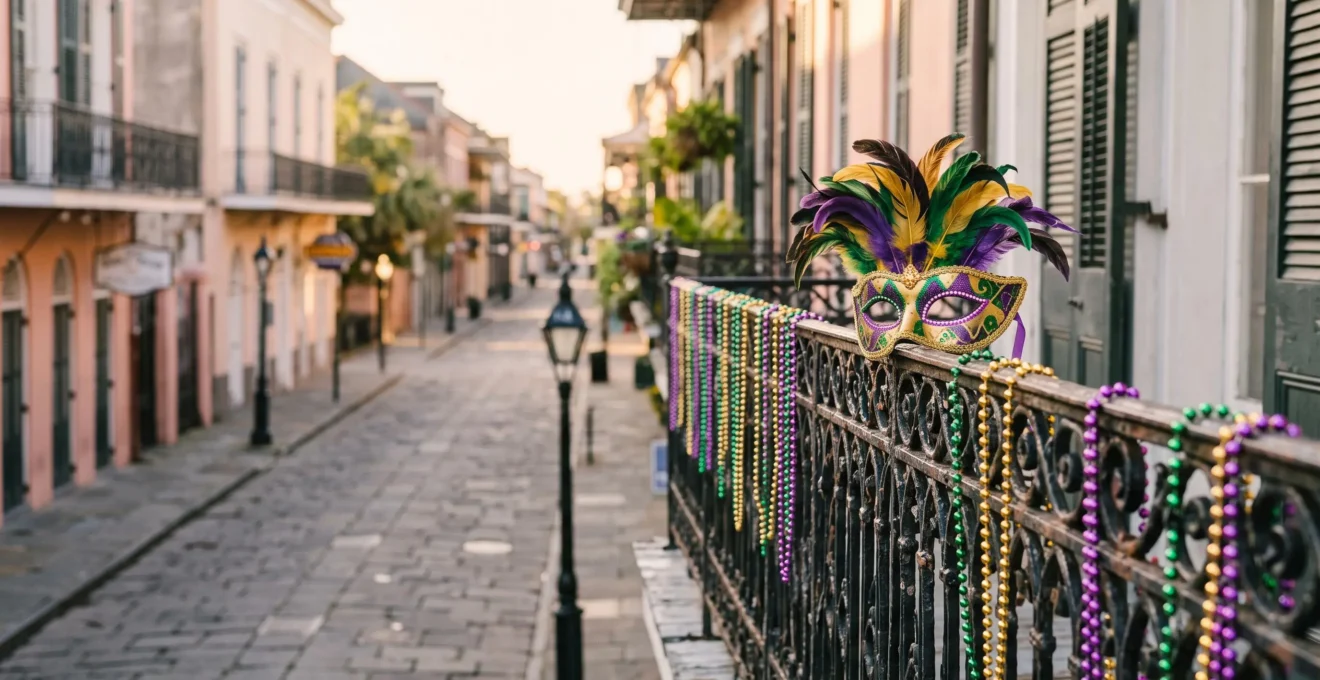
To experience the real Mardi Gras, you must understand it’s not a spectator sport—it’s a social game with its own unwritten rules, rituals, and objectives.
- Parade success isn’t about catching the most beads; it’s about engaging in the “throw economy” to earn rare, handmade treasures.
- The safest and most authentic family experience is found Uptown, far from the French Quarter’s chaos, by participating in local etiquette.
Recommendation: Instead of just watching the parades, learn the hierarchy of the Krewes and the social contracts of the season to transform your trip from a tourist’s holiday into an insider’s celebration.
When most people picture Mardi Gras in New Orleans, they imagine the raucous crowds of Bourbon Street. But for us locals, the members of the Krewes who spend all year planning for this season, that’s just a tiny, tourist-facing sliver of the real Carnival. The true soul of Mardi Gras isn’t found in a plastic cup; it’s in the shared traditions, the family gatherings on the neutral ground, and the roar of the crowd when a coveted throw is caught. It’s a city-wide celebration built on history and community, where the famous colors—Purple for Justice, Green for Faith, and Gold for Power—are more than just decoration.
Many guides will tell you what to do: go to parades, eat King Cake, and wear a costume. But they rarely explain the *why* behind these rituals. They don’t teach you the “game.” The secret to celebrating Mardi Gras like an insider isn’t just about avoiding the chaos; it’s about understanding the intricate social fabric that makes Carnival a deeply personal and cherished part of our culture. It’s about learning to participate in the rituals, not just observe them. This guide is your invitation into that world. We’ll show you how to read the parades, engage with the riders, and find the authentic, family-friendly joy that keeps us “laissez les bons temps rouler” (letting the good times roll) year after year.
This article will guide you through the unwritten rules and cherished traditions of the local Mardi Gras experience. You’ll learn the secrets to navigating the parades, understanding the culture, and making memories that go far beyond the typical tourist path. Let’s dive into the heart of Carnival.
Summary: The Insider’s Guide to an Authentic New Orleans Mardi Gras
- Rex, Zulu or Muses: what is the hierarchy and history of the parades?
- Parade technique: how to get attention to receive the best throws?
- Uptown vs French Quarter: where to take the kids to see the floats safely?
- The King Cake Baby: what happens if you find it in your slice?
- The mistake of not buying a ‘Bathroom Pass’ from a restaurant on the route
- How to take a self-guided architectural tour of the wrought iron balconies?
- How much to tip in Southern fine dining restaurants?
- How to Experience the French Quarter Beyond Bourbon Street Chaos?
Rex, Zulu or Muses: what is the hierarchy and history of the parades?
The first thing you need to understand is that not all parades are created equal. Each one is run by a “Krewe,” a social organization with its own history, personality, and status. This isn’t just a collection of floats; it’s a complex social ecosystem that is the backbone of Carnival. For us, the Krewe is a year-round commitment, a community that culminates in one glorious procession. This system is so integral to the city that a study by Tulane University revealed an $891 million total economic impact from Mardi Gras activities in 2024, proving these “clubs” are a serious cultural and economic force.
The parade hierarchy can be broken down into a few key types:
- Old-Line / Historic Krewes: These are the blue-bloods, the originals. Krewes like Rex, Proteus, and Comus emphasize tradition, secrecy, and formal elegance. Their parades are steeped in history, and being a member is a matter of lineage. They represent the classic, aristocratic roots of Carnival.
- Super-Krewes: These are the stadium-rockers of Mardi Gras. Endymion, Bacchus, and Orpheus are famous for their massive, multi-tandem floats, celebrity monarchs, and thousands of members. They are all about spectacle, lights, and non-stop energy, delivering an overwhelming sensory experience.
- Cultural, Neighborhood & Walking Krewes: This is where you find some of the most unique and beloved traditions. The Zulu Social Aid & Pleasure Club offers its prized hand-decorated coconuts with a dose of satire, while smaller walking krewes like Krewe du Vieux provide edgy, political humor on foot through the French Quarter.
The Krewe of Muses’ Signature Shoe Throw
To truly understand the value of a throw, look no further than the all-female Krewe of Muses. Inspired by the legendary Zulu coconut, their signature throw is a glitter-covered, hand-decorated high-heeled shoe. Each of the thousand-plus members spends months decorating thrifted shoes with glitter, paint, and baubles. This personal craftsmanship has turned the Muses shoe into the most coveted throw of Carnival, with paradegoers creating elaborate signs and costumes just to catch one. It perfectly embodies the “throw economy”—where artistry and effort create a value far beyond that of a simple plastic bead.
Understanding this hierarchy changes how you watch a parade. You’re no longer just seeing floats pass by; you’re witnessing a moving display of New Orleans’ social history and cultural identity. Each Krewe tells a different story, and knowing which story is unfolding in front of you is the first step to feeling like an insider.
Parade technique: how to get attention to receive the best throws?
Now that you know who is on the floats, how do you get them to throw something to *you*? This is where the “throw economy” comes into play. It’s an unspoken transaction where the currency is enthusiasm, eye contact, and genuine connection. From our perspective on the float, we’re scanning the crowd, looking for the people who are truly engaged. With an average of 64 riders per float, you have dozens of chances to make a connection with each passing spectacle, but you have to know the rules of engagement.
First, forget the Bourbon Street clichés. As a local will tell you, flashing for beads is a tourist-only activity and is more likely to get you ignored than rewarded by a Krewe member with a quality throw. We’re looking for fun, not desperation. The real secret is to stand out in a positive way. Dress up in a fun costume, make a clever sign related to the Krewe’s theme, or simply make direct eye contact and shout the classic “Throw me something, mister!” with a huge smile. Your goal is to make a personal, fleeting connection with a masked rider.
A Zulu coconut, a Muses shoe, or Iris sunglasses — signature throws are the name of the game during Mardi Gras. Not all krewes have them, but due to their rarity, parade-goers line the streets with signs, costumes, anything to get the riders’ attention.
This brings us to the ultimate prize: the signature throw. These are not mass-produced beads. They are often handmade, limited-edition items that represent the Krewe’s identity. Think of them as the “holy grail” of parade-going. When you see a family with a Muses shoe or a Zulu coconut, you know they’ve successfully played the game. They didn’t just show up; they participated.
Your Action Plan to Catch the Best Throws
- Choose Your Spot: Position yourself in a well-lit area where riders can easily see you, preferably not behind a massive crowd or a forest of ladders.
- Make Eye Contact: Don’t just scream into the void. Pick a single rider, lock eyes, smile, and point at them. This personal connection is your best tool.
- Show Enthusiasm (the Right Way): Dance, cheer, and wear festive colors. A fun, family-friendly energy is far more effective than aggressive behavior.
- Bring a Prop: A small, funny sign (“I traveled 1,000 miles for a Muses shoe!”) or a small net (a “nerd net”) can make you an easy and appealing target.
- Know What to Ask For: Instead of a generic plea, yell out the name of the signature throw you’re hoping for. It shows you’re an informed participant.
Uptown vs French Quarter: where to take the kids to see the floats safely?
The most important piece of logistical advice for families is this: the best Mardi Gras experience is Uptown, along the St. Charles Avenue parade route. The French Quarter, especially Bourbon Street, is not where the major parades happen, and it is not a kid-friendly environment during Carnival. It becomes an intense, adult-oriented party, especially as the night goes on. With over 1.7 million visitors descending on the city, the Quarter can be overwhelming and unsafe for children.
The Uptown route, by contrast, is a massive, miles-long block party for local families. The wide neutral grounds (medians) under the historic oak trees provide space to lay down a blanket, set up chairs, and let the kids run around. This is where you’ll see generations of New Orleanians sharing food, playing music, and teaching their children the art of the catch. The atmosphere is festive, communal, and safe.
As you can see, the vibe is completely different. To prepare for a day on the route, dress festively! While costumes aren’t required for spectators, joining in with purple, green, and gold attire helps everyone feel part of the city-wide celebration. It’s also a great opportunity to teach kids about the traditions. For instance, you can point out that all float riders are required by law to wear masks. This isn’t just for show; it’s a throwback to the original spirit of Carnival, where disguises allowed people from all social classes to mingle as equals. Kids love this “secret identity” aspect of the parades.
To secure a good spot, arrive a few hours before the parade starts. The beginning of the route (near Napoleon or Jefferson Avenue) is generally less crowded than the sections closer to the Central Business District. Find a spot, introduce yourself to your “neighbors” for the day, and get ready to enjoy Mardi Gras the way it was meant to be: as a joyful, family-friendly celebration.
The King Cake Baby: what happens if you find it in your slice?
Beyond the parades, the most important ritual of the Carnival season is the King Cake. It’s a sweet, brioche-style cake, usually braided and decorated with purple, green, and gold sugar. But it’s far more than just a dessert; it’s the engine of a season-long social contract.
King cake is to Mardi Gras as pumpkin pie is to Thanksgiving — without it, the holiday just would not be the same!
– David Guas, Fox News Digital
The tradition begins on January 6th, known as Twelfth Night or the Epiphany, and runs until Mardi Gras Day. Hidden inside each cake is a small trinket, most famously a tiny plastic baby. The rule is simple: if your slice has the baby, you are crowned “King” or “Queen” for the day and are responsible for bringing the next King Cake to the office, party, or family gathering. This is the social contract in action. It’s a chain reaction of celebration that ensures the festivities continue throughout the entire season.
The Social Contract That Fuels an Entire Season
If you’ve ever sliced into a king cake during Mardi Gras season, you know the moment of suspense that follows: who is going to get the baby? That single slice, and the tiny plastic figurine tucked inside, creates a chain reaction of parties. The person who finds it is on the hook to supply the next cake, carrying the whole office, school, or family group through the entire Carnival season. It’s a delicious obligation that keeps the community connected and the good times rolling, one cake at a time.
While the plastic baby is the most common prize today, the tradition is ancient. Early cakes, made in a circle to represent the path of the Three Kings, contained a bean, pea, or coin. The finder was blessed with luck and responsibility. Though the trinkets have evolved, the core meaning remains the same: a little bit of luck and a fun social duty. So, if you’re in New Orleans during Carnival, don’t just eat a slice of King Cake—participate in the tradition. The suspense of the cut is half the fun!
The mistake of not buying a ‘Bathroom Pass’ from a restaurant on the route
Here is one of the most practical—and crucial—pieces of insider advice: figure out your bathroom strategy in advance. With over 1 million tourists flooding a city of just under 400,000 residents, public facilities become the scarcest and most valuable resource along the parade route. The lines for public portable toilets can be excruciatingly long, and they are often in rough shape by the end of the day. Relying on them can quickly turn a fun day into a miserable one.
This is where another unwritten social contract comes into play: the “Bathroom Pass.” Many hotels, bars, churches, and restaurants along the parade route sell access to their clean, indoor restrooms for the day. This might come in the form of a wristband or a daily pass, typically costing anywhere from $10 to $30. While it may seem like an unnecessary expense, seasoned parade-goers know it’s the best investment you’ll make all day. Think of it as purchasing your own private oasis amidst the chaos.
Buying a pass not only saves you from the horror of portable toilets but also gives you a home base. You can step inside to wash your hands, take a break from the crowd, and regroup. Some places even offer package deals that include food and drink specials. The key is to secure these passes early, as many venues sell out. The big mistake tourists make is assuming they can just walk into any establishment to use the facilities. During Mardi Gras, restrooms are for paying customers or pass-holders only. Don’t learn this lesson the hard way. Planning your potty strategy is as essential as planning which parades you want to see.
How to take a self-guided architectural tour of the wrought iron balconies?
When you need a break from the parade route, a walk through the French Quarter or the Garden District offers another way to appreciate the city’s soul: its architecture. The iconic ironwork balconies are not just decorative; they tell the story of New Orleans’ history. Learning to “read the iron” is a fascinating activity, especially for those interested in history and design.
There’s a key distinction to look for. The older, more delicate, and handcrafted balconies are made of wrought iron. This was a hallmark of the Spanish colonial period, where blacksmiths heated and hand-hammered the iron into elegant, one-of-a-kind patterns. You can spot it by its slender, flowing lines. In contrast, the more ornate, elaborate, and repetitive latticework you see is typically cast iron. This became popular during the Victorian era, as it could be mass-produced by pouring molten iron into molds. It allowed for much more detailed and complex designs, often featuring motifs like vines, flowers, and faces.
With this knowledge, you can embark on your own self-guided tour. Stroll through the quieter streets of the French Quarter (like Royal or Chartres Street) and try to identify the Spanish-era wrought iron versus the later Victorian cast iron. The difference in texture, complexity, and craftsmanship will become apparent.
Colonel Short’s Villa: The Garden District’s Iconic Cornstalk Fence
For the ultimate example of ornamental cast iron, take a trip to the Garden District. The mansion at 1448 Fourth Street, known as Colonel Short’s Villa, features the city’s most famous cast-iron fence. Designed in 1859, it’s a breathtakingly detailed pattern of intertwined cornstalks, complete with morning glories and ears of corn. Legend says the original owner, a Kentucky native, commissioned it because his wife was homesick for the cornfields of her home state. It’s a perfect example of how cast iron could be used not just for decoration, but for storytelling.
This architectural scavenger hunt provides a peaceful and enriching counterpoint to the high energy of the parades, allowing you to connect with the city’s artistic heritage on a deeper level.
How much to tip in Southern fine dining restaurants?
After a long day of parading, you’ll likely find yourself at one of New Orleans’ legendary restaurants. Here, another set of local customs comes into play, particularly around tipping. While tipping is standard across the US, Southern hospitality culture often adds a layer of expectation for generosity, especially in fine dining establishments where service is a choreographed performance.
For good service in a New Orleans fine dining restaurant, a tip of 18% to 20% is the standard baseline. However, the service industry is the lifeblood of our city, and for exceptional service—a waiter who makes fantastic recommendations, anticipates your needs, and adds to the enjoyment of your evening—tipping 22% to 25% is common and deeply appreciated. This isn’t just a transaction; it’s a way of acknowledging the skill and effort that went into your experience.
There are a few other nuances to keep in mind:
- The Sommelier: If a sommelier assists you with selecting wine, it is customary to tip them separately. A good rule of thumb is 15% of the cost of the bottle(s) of wine, or a flat amount ($20-$40) handed to them directly, depending on the level of service and price of the wine.
- Large Parties: For groups of six or more, an automatic gratuity of 18% or 20% is often included in the bill. Always check your receipt. If it’s already there, you don’t need to add a full second tip, but it’s a nice gesture to leave a little extra for outstanding service.
- Bartenders: If you have a drink at the bar while waiting for your table, tip the bartender $1-$2 per drink.
Ultimately, tipping in the South is about showing appreciation. The servers, bartenders, and sommeliers in New Orleans are professionals who take immense pride in their craft. A generous tip is the best way to say “thank you” for the hospitality and expertise that made your meal memorable.
Key Takeaways
- The authentic Mardi Gras experience for families is found on the Uptown parade route, not in the French Quarter.
- Success at a parade is measured by the quality of “throws” you catch, which requires engaging in the “throw economy” through eye contact and enthusiasm.
- Key traditions like the King Cake and logistical necessities like “Bathroom Passes” are governed by unwritten social contracts that are essential for insiders to understand.
How to Experience the French Quarter Beyond Bourbon Street Chaos?
The French Quarter is the historic heart of New Orleans, but during Mardi Gras, its reputation is often unfairly reduced to the chaos of Bourbon Street. To experience it like a local, you must explore its other facets, especially during the quieter moments. The Quarter is vast, and most of it is a peaceful, breathtakingly beautiful residential neighborhood.
First, as a local will tell you, remember that very few major parades actually go *through* the French Quarter. They skirt its edge on Canal Street. The interior of the Quarter is your sanctuary. The best time to experience its magic is in the early morning. Wake up at dawn and walk the streets before the city fully awakens. You’ll have the cobblestones and iron-laced balconies almost to yourself, seeing the neighborhood in the soft morning light, a world away from the noise of the previous night.
Beyond a quiet stroll, there are rich cultural experiences to be found. Seek out the Mardi Gras Indians. These are not Native American tribes, but long-standing neighborhood groups of Black New Orleanians who create spectacular, hand-sewn beaded and feathered suits. They have their own routes and traditions, and seeing a tribe “masking” in their neighborhood is one of the most powerful and authentic cultural experiences you can have. Another quiet activity is to go on an architectural scavenger hunt: look for the large Rex flags hanging outside elegant homes. These mark the residences of past and present Kings and Queens of Carnival, a subtle nod to the city’s hidden royalty.
Mardi Gras parades are not all in the French Quarter (very few are), so make sure to check routes before deciding where to stay.
Embracing the French Quarter means looking beyond the party. It’s about finding the art in the galleries on Royal Street, the history in the quiet courtyards, and the living culture that thrives just a block or two away from the madness. That’s the Quarter we locals know and love.
By shifting your perspective from that of a passive observer to an active participant in a great social game, your Mardi Gras trip will transform. You’ll leave not just with a bag of beads, but with a Muses shoe, a story about the King Cake you had to buy for your new friends on the route, and a deep appreciation for the traditions that make our Carnival the greatest free show on Earth. This is how you celebrate with the locals.