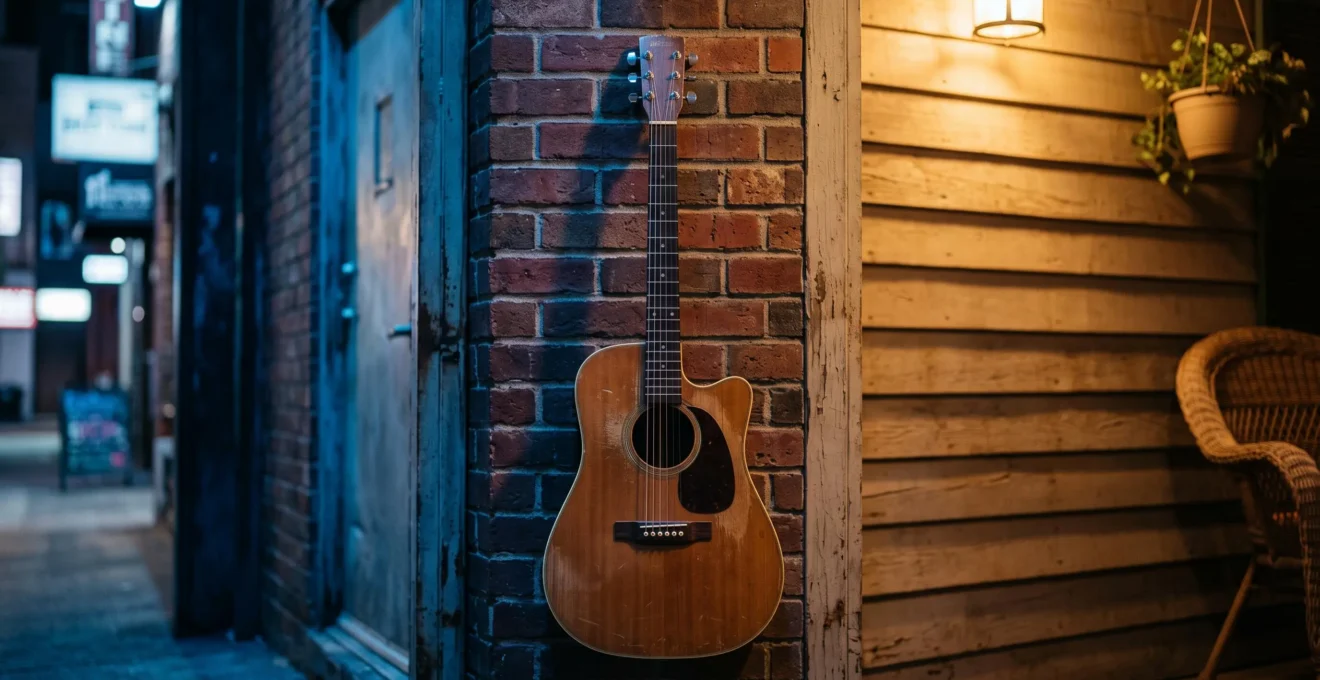
The most authentic blues experience isn’t a choice between cities, but an immersion in the journey that connects them.
- The raw, acoustic soul of Memphis and the amplified, electric grit of Chicago are two ends of the same story, written along the Illinois Central Railroad.
- True authenticity lies in tracing this “sonic corridor,” understanding how the landscape, technology, and migration shaped the music.
Recommendation: Plan your pilgrimage not as a visit to two separate destinations, but as a single, continuous narrative trip, ideally incorporating the train that started it all.
For any true music lover, the question is a rite of passage: to find the heart of American blues, should you head to Chicago or Memphis? It’s a debate waged in vinyl record shops and online forums, a choice between two sacred grounds. The common advice is to pick a side. You’re told to go to Memphis for the raw, acoustic soul of the Delta, for the ghost of B.B. King on a neon-lit Beale Street. Or, you’re pointed north to Chicago for the high-voltage, electrified grit of Muddy Waters, for late-night jams in sprawling urban clubs. This advice frames them as a simple dichotomy, two distinct flavors to be sampled.
But what if this very question is a trap? What if trying to crown one city as more “authentic” misses the point entirely? The blues is a story of movement, of struggle, and of transformation. Its power isn’t found in static locations but in the very current that flows between them. The real key to an authentic experience lies not in choosing a destination, but in understanding the physical and sonic journey that connects them. This isn’t a pilgrimage to a single Mecca, but a passage through a sacred corridor of sound forged by history and steel rails.
This guide reframes the classic debate. We will explore the unique musical DNA of each city, but we will do so by following the path of the music itself—a path carved by the Great Migration and the legendary “City of New Orleans” train line. Prepare to journey through the corridor that birthed a revolution in sound.
Summary: A Pilgrim’s Guide to the Blues Corridor
- Blues électrique ou acoustique : comment le son diffère-t-il entre les deux villes ?
- Kingston Mines ou Beale Street : où trouver l’ambiance la plus brute ?
- Pourquoi le train “City of New Orleans” est-il clé dans l’histoire du Blues ?
- L’erreur de s’éloigner des zones touristiques la nuit dans le South Side de Chicago
- Quand visiter pour assister au Chicago Blues Festival gratuit ?
- Memphis, Nashville ou la Nouvelle-Orléans : quel ordre pour une logique historique ?
- California Zephyr : pourquoi ce train offre des vues que la voiture ne permet pas ?
- How to Navigate the Deep South’s Complex History on a Cultural Tour?
Blues électrique ou acoustique : comment le son diffère-t-il entre les deux villes ?
The fundamental difference in the sound of Memphis and Chicago blues is a story of technology and geography. The Memphis sound is born from the vast, open spaces of the Mississippi Delta. It’s the sound of a single person with an acoustic guitar, a raw, heartfelt cry against a backdrop of sun-baked earth. This sound was captured, but also transformed, in the city’s legendary studios. The goal was to capture authenticity, often with innovative, minimalist techniques.
The Sun Sound: Making the Room an Instrument
At Sun Studio in Memphis, Sam Phillips pioneered recording techniques that became as famous as the artists. He wasn’t just capturing sound; he was shaping it. By pushing microphones closer to the rhythm section and using muffling to add distortion, Phillips created a unique sonic texture. His world-renowned signature ‘slapback’ tape delay echo illustrates how the studio as an instrument was a core part of the Memphis sound, adding an atmospheric quality to the raw performances.
Chicago, by contrast, is the sound of the city itself: dense, loud, and competitive. When blues musicians arrived from the South, they had to be heard over the noise of crowded bars and bustling streets. The solution was amplification. The electric guitar wasn’t just a tool for volume; it became a new voice, capable of sustaining notes, bending them into wails, and cutting through the din. The recording studios in Chicago weren’t trying to capture open space; they were bottling lightning.
The city’s recording engineers, particularly at Chess Records, became masters of capturing this raw power. They built a sound that was aggressive, heavy, and full of distortion—the perfect soundtrack for an industrial metropolis. As The Rolling Stones’ drummer Charlie Watts, a devoted student of the genre, famously noted about the label’s prowess:
I don’t think anyone anywhere could record this music as effectively as Chess did in Chicago.
– Charlie Watts, uDiscoverMusic – History Of Recording Studios
Kingston Mines ou Beale Street : où trouver l’ambiance la plus brute ?
The quest for a “raw” blues experience leads travelers to two legendary locations: Beale Street in Memphis and clubs like Kingston Mines in Chicago. But “raw” means something different in each place. Neither is a perfectly preserved time capsule, but both offer a direct connection to the living, breathing spirit of the blues.
Beale Street is a spectacle. It’s a three-block pedestrian artery of clubs, restaurants, and bars, pulsing with a constant stream of music that spills onto the street. Here, the experience is about immersion and variety. You can wander from a smoky club offering soulful R&B to another featuring gritty Delta blues, all within a few steps. It’s a festival atmosphere, encouraging visitors to linger and explore, which is likely why recent tourism data shows that visitors spend an average of 3.8 nights in Memphis. The “rawness” of Beale Street is in its collective energy, its chaotic, beautiful blend of history and tourism.
Chicago’s rawness is more concentrated and nocturnal. Venues like Kingston Mines, a North Side institution, offer a different kind of immersion. With two stages offering non-stop music until the early hours of the morning, it’s a marathon, not a sprint. The atmosphere is less about a street-wide party and more about a deep, committed listening session in a single, hallowed space. Here, the “raw” feeling comes from the sheer endurance of the musicians and the audience, a shared experience of pushing through the night, powered by searing guitar solos and a relentless rhythm section. It’s the gritty, working-class heart of Chicago blues, still beating strong.
Pourquoi le train “City of New Orleans” est-il clé dans l’histoire du Blues ?
To understand the link between Chicago and Memphis, you must understand the Illinois Central Railroad. This wasn’t just a transportation line; it was the primary artery of the Great Migration. For decades, it was this iron pathway that carried hundreds of thousands of African Americans from the rural poverty of the Deep South to the industrial promise of the North. They brought with them few possessions, but they carried the seeds of a musical revolution: the blues.
The “City of New Orleans” train, its most famous service, became a symbol of this journey. The overnight trip became a rite of passage, a rolling vessel of hope, fear, and culture. The music wasn’t just waiting at the destination; it was alive on the journey itself. This connection is so profound that it’s still celebrated today.
The Blues on Rails: A Modern Tribute
In a powerful nod to this history, Amtrak once invited musicians to ride the City of New Orleans from its southern terminus all the way to Chicago. The lounge car was transformed into an improvised blues stage, turning the entire train into a mobile performance venue. This modern reenactment perfectly highlights how the train itself functioned as a stage and a conduit for traveling blues musicians—a true pilgrimage in motion.
The journey itself tells the story. The overnight journey covers approximately 19 hours and 926 miles, tracing the Mississippi River north. It is a physical retracing of the very path that carried the acoustic blues of the Delta to Chicago, where it would be plugged in, amplified, and reborn. The official Amtrak route guide for the train puts it best, acknowledging the deep cultural significance of the route:
It is fitting that music determines the name of this route because it was in these cities that the “Blues” grew up.
– Amtrak City of New Orleans Route Guide, Official Amtrak Route Guide
L’erreur de s’éloigner des zones touristiques la nuit dans le South Side de Chicago
Modern travel guides often issue stern, vague warnings about Chicago’s South Side, advising tourists to stick to the downtown Loop and the North Side’s polished blues clubs. This advice, while well-intentioned, commits a profound historical error. To tell a blues pilgrim to avoid the South Side is like telling a classical music fan to skip Vienna. You are telling them to avoid the very crucible where the art form was forged.
The South Side wasn’t a peripheral area for the blues; it was the epicenter. It was here, in the densely populated neighborhoods that became home to migrants from the South, that the music found its urban voice. It was a landscape of “kitchenette” apartments, rent parties, and corner taverns where the amplified sound of Chicago blues was born out of necessity and creativity.
This wasn’t a hidden, underground scene. It was the commercial and creative heart of Black Chicago, a fact proven by the very founders of the Chicago sound.
The Cradle of Chess: The Macomba Lounge
Before they founded the world’s most famous blues label, Leonard and Phil Chess were nightclub owners. Their largest and most important venture, the Macomba Lounge, was located at 3905 South Drexel Boulevard—deep in the heart of the South Side. This wasn’t a “no-go zone”; it was a lucrative hub catering to a thriving Black clientele. This confirms that the South Side was not a dangerous periphery but the literal commercial and creative birthplace of modern Chicago blues, the place where the business of the blues was born.
Quand visiter pour assister au Chicago Blues Festival gratuit ?
For the ultimate blues pilgrimage to Chicago, there is no better time to visit than early June. This is when the entire city transforms into a stage for the Chicago Blues Festival, a massive, multi-day celebration of the genre’s past, present, and future. It’s an event that encapsulates the city’s deep and enduring relationship with the music.
This is not a small affair. Recognized as the world’s largest free blues festival, held annually since 1984, the event draws hundreds of thousands of fans from around the globe. Spanning several days (for example, the 2026 edition is scheduled for June 4-7), it features a lineup that ranges from living legends to the brightest emerging talents, performing across multiple stages in the heart of the city’s iconic Millennium Park. The festival is a powerful statement of civic pride, a point underscored by city leaders.
Chicago is the birthplace of modern blues, and this festival reflects the sound, soul and resilience that define our city.
– Mayor Brandon Johnson, City of Chicago Press Release
What makes the festival a true pilgrimage is that it isn’t confined to a single park. The music spills out across the city, creating a journey within a journey. It kicks off in historic venues before converging on the main stages, and even includes special events in places of deep historical significance. The event follows a narrative arc, mirroring the journey of the music from the neighborhood clubs to the world stage, culminating in a return to its roots.
Memphis, Nashville ou la Nouvelle-Orléans : quel ordre pour une logique historique ?
While the Chicago-Memphis axis is the heart of the blues migration story, the truly dedicated music pilgrim should consider widening the map. The “Sonic Corridor” doesn’t begin in Memphis; its roots stretch further south to the birthplace of jazz in New Orleans, and it has a sibling in the country music traditions of Nashville. Connecting these three cities creates a grand tour of American roots music, a journey through the very soul of the nation’s sound.
The most logical historical sequence for this expanded pilgrimage is to travel north, mirroring the cultural and migratory flows. Start in New Orleans, the cradle of jazz. Here, you can immerse yourself in the complex rhythms and improvisational spirit that form a foundational element of all subsequent American music. From there, travel north to Memphis. This is the crossroads where rural blues, gospel, and country traditions collided to create rock ‘n’ roll. After soaking in the history of Sun Studio and Graceland, the next logical stop is Nashville, the undisputed capital of country music, to understand how storytelling and string-band traditions were polished into a global phenomenon.
This itinerary isn’t just a collection of cities; it’s a living, breathing history lesson. You experience the evolution of American music in chronological and geographical order, seeing how each genre influenced the next.
The Great American Music Itinerary
Travel companies have recognized the power of this narrative. One popular rail itinerary, for instance, explicitly guides travelers through this exact progression. It uncovers the home of country music in Nashville with a visit to the Grand Ole Opry, explores the roots of blues and rock’n’roll at Graceland and Sun Studios in Memphis, and culminates in the expressive jazz of New Orleans. This sequencing turns the trip into a layered journey through the interconnected history of American roots music, making the travel itself a core part of the discovery.
California Zephyr : pourquoi ce train offre des vues que la voiture ne permet pas ?
The question of the California Zephyr, a train famed for its breathtaking journey across the Rockies and Sierra Nevada, raises a crucial point for any pilgrim: the mode of travel fundamentally shapes the experience. While the Zephyr offers a majestic panorama of the American West, the principle it represents is universal and applies directly to our blues journey. The reason train travel offers a superior perspective is that it forces a different kind of looking.
Unlike driving, train travel is not about navigating. You are not focused on the road, on exit signs, or on the next turn. Your mind is free to wander, to watch the landscape unfold not as a series of obstacles or waypoints, but as a continuous, flowing tapestry. The view from a train window is uncurated. It’s the backyards, the industrial edges of town, the untamed fields—the very fabric of the country that a highway is designed to bypass. This is especially true for the City of New Orleans route.
Traveling the “Sonic Corridor” by rail from Memphis to Chicago, you are not just seeing scenery; you are seeing context. You are passing through the same small towns, crossing the same rivers, and seeing the same flat, fertile land that the original bluesmen saw as they made their way north. It offers a meditative state, a rhythm that syncs with the chugging beat of the music itself. The train gives you the gift of time and perspective, allowing the history of the landscape to sink in, a gift a car journey, with its focus on speed and efficiency, can rarely offer.
Key Takeaways
- The Chicago vs. Memphis debate is a false choice; the true experience is in the journey connecting them.
- The sound of each city is its “geographic DNA”: Memphis’s raw acoustics vs. Chicago’s amplified urban grit.
- The “City of New Orleans” train line is the historical and symbolic artery of the blues, making it the ideal mode of travel for a pilgrimage.
How to Navigate the Deep South’s Complex History on a Cultural Tour?
A blues pilgrimage is not just a musical journey; it is a historical one. The story of the blues is inextricably linked to the story of African Americans in the Deep South, a narrative of immense hardship, resilience, and the fight for civil rights. To travel this path without acknowledging this history is to hear only half the song. An authentic cultural tour requires a commitment to engaging with this complex, and often painful, past with respect and an open mind.
In Memphis, this history is not hidden. It is powerfully and prominently presented. The city is home to the National Civil Rights Museum, located at the site of the former Lorraine Motel where Dr. Martin Luther King Jr. was assassinated. This is not a side trip; it is essential. Since opening in 1991, the museum has welcomed millions of visitors, including over 90,000 students annually, cementing its role as a cornerstone of American historical education. It provides the crucial context for the music that was born from the very struggles it documents.
Engaging with this history doesn’t mean leaving the music behind. In Memphis, the history is embedded within the very streets of the blues district. A conscious traveler can and should actively seek out these points of connection. This transforms a simple music tour into a much deeper and more meaningful pilgrimage, honoring the full story of the people who created this incredible art form.
Your Action Plan: An Aware Visit to Beale Street
- Landmarks of Struggle and Stage: Begin by visiting the Historical Daisy Theatre and the adjacent Randle Catron Interpretive Center to understand the district’s entertainment and social history.
- The Visual Record: Stop at the Withers Collection Museum & Gallery. Here you can see the Civil Rights era through the lens of photographer Ernest Withers, who captured both musical legends and pivotal movement moments.
- Sanctuary and Strategy: Pay your respects at First Baptist Beale Street Church. This historic site served not just as a place of worship but as a crucial meeting point for the Black community and civil rights activists.
- Civic Roots: Walk through Robert R. Church Park, a space named for the South’s first Black millionaire and tied to the district’s proud history of Black commercial ownership and civic engagement.
- Reflect and Connect: After your walk, as you listen to the music in the clubs, reflect on how the sounds of joy and pain are woven from the history you’ve just witnessed.
Embarking on a blues pilgrimage is more than a vacation; it’s an educational and emotional journey. By traveling with awareness, you don’t just consume the music; you honor its creators and the profound human story from which it was born. Start planning your trip not as a choice between two cities, but as a passage through the heart of American history.