In summary:
- Trade the crowded I-70 corridor for historic backroads to uncover Colorado’s authentic mining-era soul.
- Make informed choices between iconic hot springs like Glenwood and Pagosa based on your travel style—family fun vs. wellness retreat.
- Experience local culture by skipping Aspen’s tourist restaurants in favor of beloved, budget-friendly local haunts.
- Embrace “living history” by exploring remarkably preserved ghost towns and riding the historic Durango & Silverton steam train.
- Navigate modern Colorado culture responsibly by understanding the nuanced rules of legal cannabis consumption.
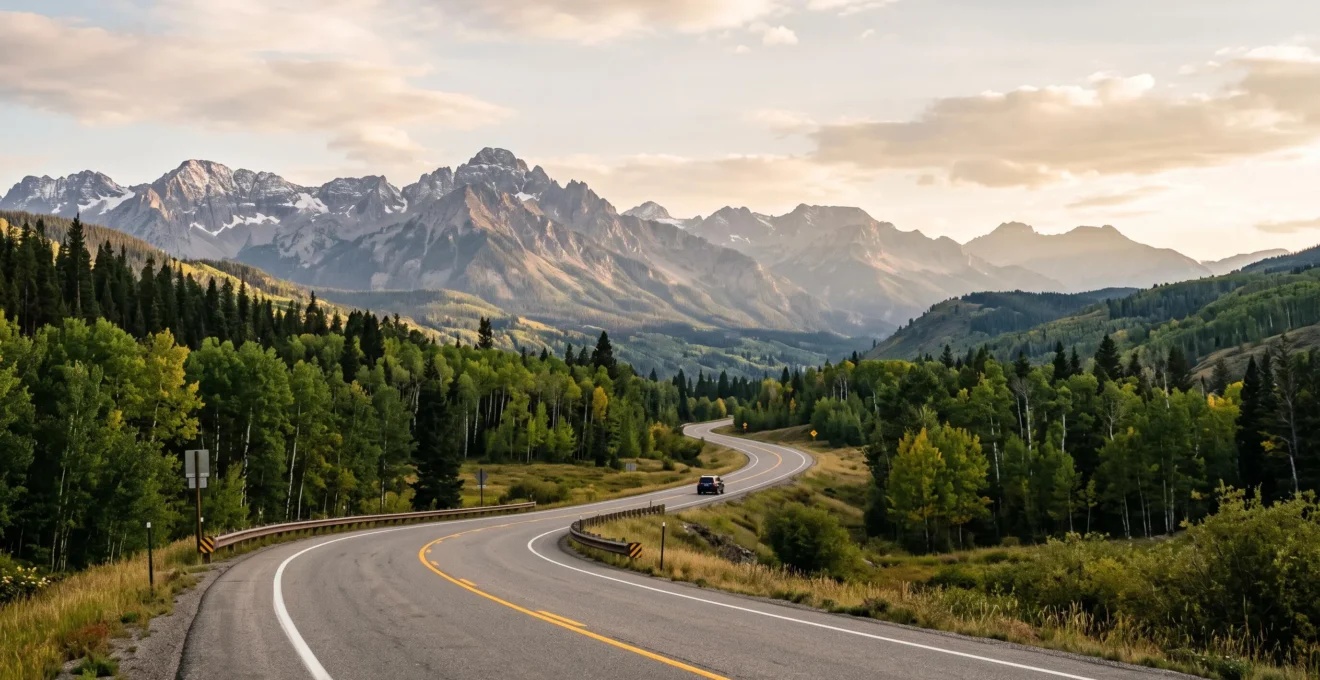
Planning a summer trip through the Colorado Rockies can feel like following a well-trodden path. Most itineraries shuttle you from Denver to Aspen via the busiest highways, suggesting the same ski resorts reimagined for summer and the same crowded hiking trails. You’re told to pack layers, drink water to combat the altitude, and book everything months in advance—sound advice, but it barely scratches the surface of what makes this state truly captivating.
This kind of travel often misses the point. It treats Colorado’s towns as mere service stations for outdoor adventure, overlooking the deep, fascinating history etched into their very foundations. From the raucous legacy of the gold rush to the quiet dignity of Victorian architecture, a richer story awaits those willing to look just beyond the main road. The standard itinerary gives you the views, but it often withholds the soul.
But what if the key to an unforgettable Colorado journey wasn’t about seeing more, but about seeing deeper? This 10-day itinerary is built on that very idea. We’re setting aside the tourist-centric playbook to act as cultural explorers. We’ll follow the echoes of prospectors into beautifully preserved ghost towns, choose our restorative soaks based on character instead of convenience, and eat where the locals eat. We’ll learn why a train ride can offer views a car never will and how to navigate the state’s unique modern culture with respect and confidence.
This is a journey designed not just to be seen, but to be felt. It’s a road map to the historic heart of Colorado, offering a curated path through its most compelling stories, landscapes, and experiences. Prepare to discover a side of the Rockies that most summer travelers speed right past.
To guide you on this journey of discovery, this article is structured to answer the key questions a curious traveler might have. The following summary outlines the path we’ll take, from the ghosts of the past to the modern rules of the road.
Summary: A Journey Through Colorado’s Historic Heart
- Why Visiting the Ghost Towns Around St. Elmo Is Fascinating
- Glenwood Springs or Pagosa Springs: Which Hot Springs Should You Choose?
- How to Consume Cannabis Legally Without Breaking Federal Rules
- The Mistake of Eating at Aspen’s Tourist Restaurants
- When to Book the Durango-Silverton Train for an Open-Air Car Seat
- How to Take a Self-Guided Architectural Tour of Colorado’s Victorian Mining Towns
- California Zephyr: Why This Train Offers Views a Car Never Could
- How to Experience the French Quarter Beyond Bourbon Street Chaos?
Why Visiting the Ghost Towns Around St. Elmo Is Fascinating
Stepping into St. Elmo is less like visiting a historical site and more like walking onto a film set where the actors just stepped away for lunch. Tucked away in the Sawatch Range, it’s not a collection of ruins but a town frozen in time. Unlike other ghost towns that have crumbled into foundations and memories, St. Elmo offers a tangible connection to the Pikes Peak Gold Rush. The dusty main street is lined with wooden storefronts that feel uncannily alive, inviting you to imagine the clatter of horse-drawn wagons and the murmur of miners discussing their latest find.
The town’s remarkable state of preservation is its main draw. According to local historical societies, St. Elmo boasts 43 original buildings still standing, including the old saloon, the mercantile, and the combined courthouse and jail. This level of integrity makes it one of the most immersive ghost town experiences in the Rockies. You can almost feel the presence of the 2,000 souls who once called this remote outpost home, their lives dictated by the promise of gold and silver in the surrounding hills.
While St. Elmo is the most accessible and well-preserved, it’s part of a larger triangle of historic mining camps, each with its own unique character. Choosing which to visit depends on your appetite for adventure and history.
| Ghost Town | Character | Access | Best For |
|---|---|---|---|
| St. Elmo | One of Colorado’s best-preserved ghost towns, with wooden storefronts and a dusty Main Street | Reachable by a regular car | First-time visitors wanting an easy, atmospheric stop |
| Tin Cup | Infamous for its rowdy reputation, with echoes of its lawless past still visible at the town cemetery | Requires a 4×4 over Tincup Pass | History buffs chasing Wild West lore |
| Pitkin | A quieter former mining camp that has transitioned into a semi-inhabited living town | Accessible via CR-76, doable in a 2WD car | Travelers wanting a gentler, lived-in ghost town |
Exploring these towns isn’t just about sightseeing; it’s about engaging with living history. You can feed the chipmunks that famously swarm the general store, browse for antiques, or even rent an off-road vehicle to explore the old mining trails that spiderweb into the high country. It’s an experience that connects you directly to the grit and optimism of the American West.
Glenwood Springs or Pagosa Springs: Which Hot Springs Should You Choose?
After a few days of dusty roads and high-altitude hikes, nothing feels more essentially “Colorado” than a long soak in natural hot springs. The state is dotted with geothermal treasures, but for many travelers, the choice boils down to two titans: Glenwood Springs and Pagosa Springs. While both offer blissful relaxation, they provide fundamentally different experiences, appealing to different kinds of travelers. Choosing the right one is about matching the destination’s character to your own travel philosophy.
Glenwood Springs, conveniently located right off I-70, is home to the world’s largest mineral hot springs pool. Its sheer scale makes it a hub of activity, perfect for families and multi-generational groups. It’s a social, lively atmosphere where kids can splash and play in the massive, bathwater-warm pool. For those seeking a more refined experience, the nearby Iron Mountain Hot Springs offers a series of smaller, quieter pools with stunning views of the Colorado River, providing an upscale alternative to the main resort.
Pagosa Springs, on the other hand, is a destination for the wellness purist. Its claim to fame is possessing the world’s deepest known geothermal hot spring, a record-setting natural wonder that feeds nearly two dozen terraced pools. The vibe here is less about recreation and more about restoration. The Springs Resort & Spa has cultivated a serene, almost spiritual atmosphere, with adults-only sections and pools of varying temperatures stacked along the San Juan River. One local blogger famously described alternating between the scalding “Mother Spring” and the cold river as “the fastest legal high available in Colorado”—a testament to its potent, restorative power.
| Factor | Glenwood Springs | Pagosa Springs |
|---|---|---|
| Main Pool | The main pool is considered the world’s largest mineral hot springs pool, around 90°F | Nearly two dozen terraced pools stacked above the San Juan River, ranging from warm to scalding |
| Best For | Families, multi-generational trips, road-trip stopovers off I-70 | Wellness purists and serenity seekers wanting a dramatic mountain setting |
| Romantic Option | Iron Mountain Hot Springs for a more intimate, upscale soak | Adults-only pools for quiet, riverside soaking |
Ultimately, the decision rests on your priority. If you’re looking for a fun, convenient stopover that caters to everyone, Glenwood Springs is an easy win. But if your goal is a dedicated wellness escape to soak in a dramatic mountain setting with a focus on therapeutic heat, the journey to Pagosa Springs offers a deeper reward.
How to Consume Cannabis Legally Without Breaking Federal Rules
Since its legalization, cannabis has become an integral part of Colorado’s cultural landscape, much like its craft beer scene. For many visitors, experiencing this unique aspect of local life is part of the appeal. However, navigating the rules can be confusing, as state and federal laws often clash. Understanding the legal landscape isn’t just about following rules; it’s about being a respectful and responsible visitor. The key thing to remember is this: while cannabis is legal in Colorado, it remains illegal under federal law, and that distinction matters immensely.
The most significant point of confusion for travelers arises from land ownership. It’s a crucial detail that federal land covers over a third of the state. This includes all national parks (like Rocky Mountain National Park), national forests, monuments, and even many ski slopes that operate on leased federal land. The moment you step onto these properties, state law no longer applies. Possessing or consuming cannabis there carries the same federal penalties as it would in a state where it’s illegal, a risk no traveler should take.
So, where can you legally consume? The answer is almost exclusively on private property, with the owner’s permission. This creates a challenge for tourists, as most hotels and vacation rentals have policies banning its use. Public consumption—in parks, on sidewalks, or in your car—is strictly illegal. Your safest bet is to seek out cannabis-friendly lodging or one of Colorado’s licensed hospitality businesses, such as a “cannabis lounge” or a tour where consumption is permitted.
Here are the fundamental rules for any visitor:
- Avoid Federal Land Entirely: Do not bring or use cannabis in national parks, national forests, or on ski slopes. It’s a federal offense.
- Default to Private Property: Your best bet for legal consumption is on private property where you have explicit permission.
- Ask Before Lighting Up at Your Lodging: Most hotels prohibit cannabis use. Always check the policy before booking or consuming.
- Look for Licensed Experiences: Seek out cannabis tours, yoga classes, or lounges where on-site consumption is legally sanctioned.
- Don’t Drive High: Driving under the influence of cannabis is illegal and carries severe penalties, just like a DUI for alcohol.
By respecting these boundaries, you can explore this aspect of Colorado culture safely and responsibly, ensuring your memories are of the state’s natural beauty, not of a legal headache.
The Mistake of Eating at Aspen’s Tourist Restaurants
Aspen’s reputation for glitz and glamour is well-earned, and nowhere is this more apparent than in its dining scene. The town’s central core is packed with high-end restaurants where reservations are scarce and price tags are breathtaking. While a splurge-worthy meal can be a memorable part of any vacation, a common mistake visitors make is assuming that expensive automatically means better, or that these are the only options available. The truth is, the most authentic and often most satisfying meals in Aspen are found where the locals eat—in unassuming spots just off the main drag.
As the staff of the local paper wisely noted, “Aspen still has a few spots where you can take in a good meal and drink and not leave with sticker shock.” This sentiment perfectly captures the spirit of “the local’s fork.” It’s about seeking value and character over prestige. Eating like a local in Aspen means trading a white tablecloth for a counter-service wrap, or a celebrity chef’s creation for a hearty deli sandwich that fuels a day of hiking.
Aspen still has a few spots where you can take in a good meal and drink and not leave with sticker shock.
– The Aspen Times staff, The Aspen Times
The price-to-experience ratio in Aspen can be skewed. A sandwich at a casual tavern might still run you $25, but it often delivers more genuine satisfaction and local flavor than a $50 entrée at a more tourist-focused establishment. The real secret, however, lies in the town’s delis and markets.
| Category | Example | Price Note |
|---|---|---|
| Splurge-Worthy Icon | Historic hotel bar/restaurant | Priced for the experience and history, not just the food |
| High-Value Hidden Gem | Casual local tavern | A sandwich can run around $25, with fries around $8 |
| Ultimate Local’s Lunch | Grocery store deli counter | Full meals for a fraction of restaurant prices |
To truly eat like a local and save your travel budget for other experiences, consider these beloved spots:
- Big Wrap: A legendary counter-service spot known for fresh, massive wraps and burritos that are perfect for a quick, delicious lunch.
- Grateful Deli: A true local’s gem serving hearty sandwiches, soups, and salads with generous portions and a laid-back vibe.
- New York Pizza: Open late and a go-to for an affordable and satisfying slice, it’s a favorite of both locals and visitors in the know.
By venturing just a few steps away from the glitzy center, you’ll discover the places that form the true culinary heart of the community. It’s a more sustainable, authentic, and often more delicious way to experience this iconic mountain town.
When to Book the Durango-Silverton Train for an Open-Air Car Seat
Riding the Durango & Silverton Narrow Gauge Railroad is more than just a scenic trip; it’s a journey into the heart of Colorado’s industrial past. This coal-fired, steam-powered locomotive has been chugging along the same tracks since 1882, originally built to haul silver and gold ore from the San Juan Mountains. Today, it hauls travelers through a breathtaking, roadless wilderness along the Animas River. For many, the highlight is the open-air gondola car, which offers unobstructed 360-degree views, the smell of coal smoke, and the full sensory experience of the journey. But securing one of these coveted seats requires planning.
The number one rule for booking the Durango & Silverton is to book early, especially for the open-air cars. These are, without a doubt, the first seats to sell out. For peak travel times—like summer weekends, holiday periods, and the immensely popular fall foliage weeks—the official recommendation is to book months in advance. In fact, it’s not uncommon for open-air gondola seats to sell out three to four months ahead of a popular date. Waiting until you arrive in Durango to book a seat is a recipe for disappointment.
Choosing the right car is crucial to your experience, as each class offers a different perspective on the journey. The open-air gondolas provide the most immersive experience, but also expose you to the elements—sun, wind, and the occasional cinder from the smokestack.
| Car Class | Experience | Booking Priority |
|---|---|---|
| Open-Air Gondola | Open-air gondola cars and certain first-class cars with large windows or outdoor platforms maximize the scenery, but expose riders to sun, wind, and cinders | Books first — reserve early |
| Enclosed Coach | Standard, weather-protected, budget-friendly and authentic | Usually more availability |
| Presidential/First Class | Premium seating and service | Sells out alongside open gondola seats |
Beyond booking early, a few insider tips can elevate your trip:
- Pick a side: When departing from Durango, the right side of the train generally offers the best and most frequent views of the Animas River and the dramatic “High Line” section of the tracks.
- Dress for soot: The steam locomotive is an authentic piece of history, and that includes the soot and cinders it produces. Wearing sunglasses and darker clothing is a practical choice, especially in an open car.
- Consider the one-way option: The full round-trip is a long day (over 9 hours). A popular alternative is to take the train one way and a shuttle bus the other. The bus ride is much faster (about 1.5 hours), giving you more time to explore Silverton.
This isn’t just a tourist train; it’s a moving national historic landmark. By planning ahead, you ensure your place aboard a piece of American history and guarantee a front-row seat to some of the most spectacular scenery in the West.
How to Take a Self-Guided Architectural Tour of Colorado’s Victorian Mining Towns
The true story of Colorado’s mining boom isn’t just found in museums; it’s written on the facades of the buildings in towns like Telluride, Ouray, and Leadville. These former boomtowns are treasure troves of Victorian architecture, where fortunes made deep underground were displayed for all to see in the form of ornate ironwork, intricate “gingerbread” trim, and stately brick opera houses. Taking a self-guided architectural tour is a fantastic way to connect with this history, turning a simple stroll into a lesson in economics, culture, and craftsmanship.
The beauty of this architecture lies in the details. As you wander, train your eye to look beyond the overall building and focus on the specific elements that give these structures their character. The delicate scrollwork on a cast-iron storefront or the hand-carved trim on a porch gable tells a story of ambition and civic pride. These weren’t just functional buildings; they were statements.
As the image above highlights, the texture and craftsmanship are key. Notice the interplay between the hard, dark patina of the cast iron and the softer, weathered grain of the wood. This contrast speaks to both the industrial might and the artisanal skill that built these towns. To structure your own exploration and transform from a tourist into an observer, you can follow a simple five-step audit.
Your Action Plan: Auditing a Town’s Victorian Soul
- Identify Key Structures: Before you start, list the town’s most significant historic buildings—like the courthouse, opera house, or a famous saloon—on a walking map to create a logical route.
- Gather Visual Details: As you walk, inventory the distinct architectural elements you see. Look for cast-iron facades, intricate gingerbread trim, false fronts designed to make buildings look bigger, and elegant bay windows.
- Compare with History: Cross-reference what you see with the town’s historical timeline. Does the grandeur of the architecture align with its peak boom years? Do simpler structures tell a story of a later, more modest era?
- Spot Unique vs. Common Features: Note what makes this town’s style unique compared to others. Is it a particular color palette, the exceptional state of preservation, or a recurring local motif in the ironwork?
- Map Your Photo Story: Plan key photographs to capture the town’s character, focusing on the details you’ve identified. Combine wide streetscapes with close-ups of specific textures to tell a complete visual story.
By using this approach, you move beyond passive sightseeing. You begin to read the town like a historian, decoding the stories of prosperity, resilience, and artistry that are preserved in its architecture. It’s a rewarding way to find the soul of a place, hidden in plain sight.
California Zephyr: Why This Train Offers Views a Car Never Could
In an era dominated by the road trip, choosing to cross the Rockies by train feels like a deliberate, almost romantic act of slowing down. But taking Amtrak’s California Zephyr between Denver and Glenwood Springs isn’t just about nostalgia; it’s about access. This legendary train route follows a path carved by the Denver & Rio Grande Western Railroad in the 19th century, a path that snakes through canyons and over passes completely inaccessible by car. It offers a perspective on the Colorado landscape that remains hidden from those on the highway.
The most spectacular portion of the journey is the segment through Glenwood Canyon. While I-70 now shares the canyon floor, the elevated highway was engineered to preserve the view as much as possible, but it can’t compare to the river-level vantage point of the train. The Zephyr glides along the banks of the Colorado River, putting you at the very bottom of the immense, 1,300-foot canyon walls. From the train’s sightseer lounge car, with its floor-to-ceiling windows, you can gaze straight up at the sheer cliffs, an awe-inspiring view that is simply impossible to get while navigating traffic on the interstate.
Beyond Glenwood Canyon, the train travels through a series of other roadless wilderness areas. It traverses Gore Canyon and Byers Canyon, rugged and wild places where the tracks are the only sign of human passage. Looking out the window, you see a pristine landscape—towering rock formations, dense forests, and the rushing river—uninterrupted by billboards, gas stations, or the asphalt of a highway. It is in these moments that the train’s true value is revealed: it’s a key to a more intimate and unspoiled Colorado.
Choosing the train isn’t the fastest way to get from Denver to western Colorado, but speed is not the point. The journey itself is the destination. It’s a chance to disconnect from the stress of driving, to read a book, to have a conversation, and to simply watch one of the world’s most spectacular landscapes unfold outside your window. It’s a powerful reminder that sometimes, the best view is reserved for those who choose the path less traveled.
Key Takeaways
- The soul of Colorado is often found on the historic backroads, not the main interstate, in the stories of its well-preserved ghost towns.
- Choosing the right experience, from hot springs to restaurants, means prioritizing local character over tourist-centric convenience.
- Responsible travel in modern Colorado requires understanding the nuanced legal landscape, particularly the critical distinction between state and federal land.
How to Experience the French Quarter Beyond Bourbon Street Chaos?
At first glance, this question seems out of place. We’re in the heart of the Rocky Mountains, a thousand miles from the sultry air and jazz-filled streets of New Orleans. And yet, the central challenge of this question—how to find authenticity amidst chaos—is a universal lesson for any traveler, and it applies as much to Aspen as it does to the French Quarter. The core mistake many visitors make, whether on Bourbon Street or on a bustling Colorado main street, is confusing the epicenter of tourism with the heart of the culture.
Bourbon Street, with its neon lights, raucous bars, and crowds of tourists, offers a potent but one-dimensional version of New Orleans. It’s loud, it’s famous, and for many, it’s fun. But it is not the entirety of the city. The real magic of the French Quarter is found on the quieter, gas-lit side streets: in the hidden courtyards, the dusty antique shops on Royal Street, the intimate jazz clubs of Frenchmen Street, and the conversations with local artists in Jackson Square. To truly experience New Orleans, you have to make a conscious decision to step away from the chaos.
This is the exact same principle we must apply to our Colorado journey. The “Bourbon Street” of a Colorado ski town might be the central pedestrian mall in Vail, the main shopping drag in Breckenridge, or the cluster of high-end galleries in Aspen. These places are the public face of the town, polished and presented for visitors. They are an important part of the experience, but they are not the whole story. The authentic soul of the place—the “local’s fork,” the quiet architectural details, the stories shared over a craft beer—exists just beyond that chaotic center.
This entire itinerary is built on that philosophy. It’s about choosing the St. Elmo ghost town over a crowded park entrance, the local’s deli over the celebrity chef’s restaurant, and the historic train over the congested highway. It’s a reminder that the most memorable travel experiences often happen when we have the courage to turn left when the crowd turns right. The lesson from the French Quarter is clear: don’t let the noise of the main attraction deafen you to the quieter, more beautiful music of the place itself.
By applying this mindset, you transform from a tourist following a checklist into a traveler engaging in discovery. The next step is to take these principles and build the Colorado journey that speaks directly to you.
Frequently Asked Questions on a Colorado Itinerary
Can out-of-state tourists buy cannabis in Colorado?
Yes — both out-of-state tourists and Colorado residents can purchase up to 1 ounce of cannabis or its equivalent per transaction from a licensed dispensary. You must be 21 or older with a valid government-issued ID.
Can I bring cannabis I bought in Colorado into Rocky Mountain National Park?
No. This is a critical point to understand. It doesn’t matter that you purchased it legally from a licensed Colorado dispensary—the moment you cross into a national park, state law stops applying and federal law takes over. Possession is illegal on all federal lands.
Can I mix flower and edibles in one purchase?
Yes. Colorado’s law uses an equivalency system. This allows you to mix different types of cannabis products—like flower, edibles, and concentrates—in a single purchase, as long as the combined total stays at or under the 1-ounce equivalent limit.