In summary:
- Most families try to see everything in Central Park and end up exhausted and overwhelmed, only visiting the most crowded spots.
- A successful day requires a geographical strategy, blending iconic landmarks in the south with hidden gems in the north.
- Mastering the park’s rhythm—knowing when to walk, when to bike, and where to find quiet moments—is the key to a truly magical experience.
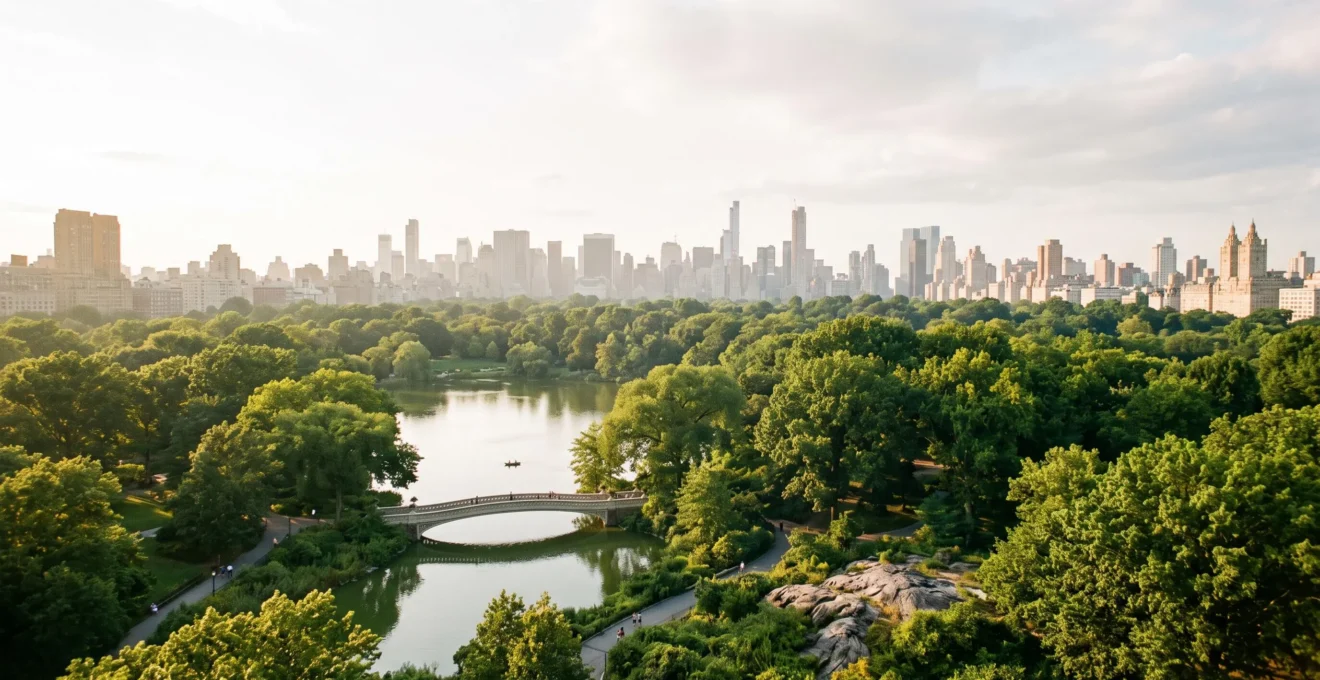
Staring at a map of Central Park can be daunting. It’s 843 acres of winding paths, sprawling lawns, and iconic landmarks, a green oasis dropped in the middle of Manhattan. For an active family eager to see it all, the temptation is to create a frantic checklist: Bethesda Terrace, Strawberry Fields, the Carousel, Bow Bridge. You rush from one photo op to the next, battling crowds and ending the day feeling like you’ve completed a marathon, not a cherished family outing. You’ve seen the park, but have you truly experienced it?
As someone who calls the Upper West Side home, I can tell you the real magic of Central Park isn’t just in its famous destinations. It’s in its rhythm, its secrets, and its flow. The key to a perfect day isn’t just about what you see, but *how* and *when* you see it. It’s about creating a geographical strategy that respects your family’s energy and allows you to balance the iconic with the intimate. It’s knowing where to find a quiet waterfall minutes from a bustling plaza, or where to grab the perfect picnic supplies like a real New Yorker.
But what if the key wasn’t to see more, but to experience more deeply? This guide is built on that principle. Instead of a checklist, think of this as a local’s playbook. We’re going to move beyond the typical tourist trail to explore the park strategically, from its wild, secret corners to its most celebrated fields. We’ll talk about the practicalities—bike or walk, safety after dark, and even where to find free water—so you can focus on making memories. This is how you conquer Central Park without letting it conquer you.
To help you craft your perfect day, this guide is structured around the key questions and strategies for navigating the park like a seasoned local. The following sections will give you the inside track on everything from hidden gems to logistical secrets.
Summary: A Local’s Playbook for Your Day in Central Park
- Why the North Woods is the best-kept secret of the locals?
- Where to buy the best products for a picnic at Sheep Meadow?
- Bike or walk: which way to choose to see the most in 3 hours?
- The mistake of venturing into certain areas of the park after dark
- When to see the cherry blossoms: the precise calendar to not miss them
- Hot during the day, cold at night: how to manage thermals in a geodesic dome?
- Where to find free drinking water to avoid buying 50 plastic bottles?
- How to Experience Yellowstone Without the Crowds?
Why the North Woods Is the Best-Kept Secret of the Locals?
While most visitors flock to the southern end of the park, New Yorkers in the know often head north. The reason? The North Woods. This is where the manicured lawns give way to a rugged, rustic landscape that feels miles away from the city. For a family looking for a genuine adventure, this area is an absolute treasure. It’s the largest of the park’s three woodland landscapes and offers a true sense of discovery that you just can’t find near the more famous landmarks.
The magic of the North Woods is intentional. To understand its appeal, it helps to know the vision of its creators. As the Central Park Conservancy explains:
To create the North Woods, designers Frederick Law Olmsted and Calvert Vaux incorporated the area’s existing dramatic topography, added trees and other vegetation, and designed new features such as water bodies, cascades, and rustic bridges, with the goal of creating an impression of a rugged wilderness in the heart of the City.
– Central Park Conservancy, North Woods location page
This isn’t just a patch of trees; it’s a meticulously designed piece of the Adirondacks in Manhattan. You’ll find tumbling waterfalls, stone arches, and quiet, winding paths perfect for exploration. The highlight for many is the Loch, a stream that cascades through a small ravine. It’s an ideal spot to let the kids burn off some energy while feeling completely immersed in nature.
Unlike the bustling Mall or Sheep Meadow, the North Woods offers solitude and surprise. It’s a place for unstructured play and quiet observation. For an active family, dedicating an hour to exploring this northern tip provides a perfect counterbalance to the more crowded, structured activities in the rest of the park. It’s the ultimate “insider tip” for experiencing the park’s true diversity.
Where to Buy the Best Products for a Picnic at Sheep Meadow?
A picnic on the sprawling green of Sheep Meadow is a quintessential Central Park experience. With its stunning skyline views, it’s the perfect place for a family to relax, recharge, and soak in the atmosphere. But the difference between a mediocre picnic and a memorable one lies in the supplies. Tourists might grab a sad, overpriced sandwich from a cart, but locals know the secret is to provision just outside the park for a truly gourmet spread.
Your strategy depends on where you enter the park. If you’re coming from the west side, the area is a food-lover’s paradise. A classic stop is Zabar’s on Broadway and 80th Street, a legendary New York delicatessen. You can pick up world-class cheeses, smoked fish, fresh-baked breads, and classic black-and-white cookies. A bit further south, the Whole Foods at Columbus Circle offers a massive selection of high-quality prepared foods, salads, and sandwiches, making it an incredibly convenient one-stop shop before entering the park at 59th Street.
If you’re entering from the east side, you have equally fantastic options. Eli Zabar’s outposts, like E.A.T. on Madison Avenue, provide upscale sandwiches, pastries, and salads. For something a bit more casual, there are numerous high-quality delis and markets along Lexington and Third Avenues where you can assemble your own feast. The key is to think like a New Yorker: prioritize quality and portability. A great crusty baguette, some good cheese, fresh fruit, and a sweet treat are all you need.
Don’t forget the essentials: a blanket, reusable water bottles (we’ll cover where to fill them later!), and a bag for your trash. The rule in Sheep Meadow is “carry in, carry out” to keep it beautiful for everyone. By taking 20 minutes to shop like a local, you elevate a simple lunch into a core memory of your family’s perfect day in the park.
Bike or Walk: Which Way to Choose to See the Most in 3 Hours?
For an active family with limited time, this is the million-dollar question. Do you cover more ground on two wheels or immerse yourselves on two feet? The answer depends entirely on your goal: do you want a grand overview of the park’s scale and major landmarks, or a deep, intimate exploration of one or two specific areas? In a three-hour window, you can’t do both, so choosing your mode of transport is your most important strategic decision.
Biking offers unparalleled efficiency for covering distance. The main loop of Central Park is a paved road with dedicated lanes, making it safe and relatively easy to navigate. According to data for Citi Bike users, the Full Loop is 6.1 miles and takes 45-60 minutes to complete at a leisurely pace. This means that within three hours, your family could comfortably ride the entire loop, stopping briefly at major sights like the Jacqueline Kennedy Onassis Reservoir, the Great Lawn, and the southern plazas. Biking gives you a fantastic sense of the park’s immense size and diverse landscapes in a short amount of time.
Walking, on the other hand, is about depth over distance. The park has over 47 miles of pedestrian-only paths that bikes can’t access. These paths take you into the heart of areas like The Ramble, a dense woodland maze, or the intricate gardens of the Conservatory Garden. To walk the entire park would take a full day. In three hours, you could thoroughly explore one major zone—for example, the entire area from Bethesda Terrace through The Ramble and up to Belvedere Castle. This option is for families who want to discover hidden details, climb on ancient rock formations, and truly lose themselves in the park’s magic.
To make the best choice, this comparison can help you decide. As this comparative analysis from Holland Bikes shows, each mode offers a distinct experience.
| Mode | Path Network Available | Full Loop Duration | Best For |
|---|---|---|---|
| Biking | 6.6 miles of dedicated bike paths | 45-60 minutes at a relaxed pace | Covering the whole park and major landmarks quickly |
| Walking | 47 miles of pedestrian paths | Would take a full day to cover on foot | Deep immersion in one specific area’s details |
Your 3-Hour Park Strategy Checklist
- Define Your Goal: Do you want a “greatest hits” tour (Bike) or an immersive adventure in one zone (Walk)? Decide as a family first.
- Map Your Route: If biking, stick to the main loop. If walking, pick one cluster of attractions (e.g., Mid-Park from 72nd to 79th St). Don’t try to zig-zag across the park.
- Consider a Hybrid Plan: Bike the main loop for an hour to get the grand tour, then ditch the bikes at a docking station and explore one area, like the Lake or the Ramble, on foot.
- Factor in Stops: Biking the loop might take an hour, but photo stops, bathroom breaks, and water breaks can easily double that time. Plan for it.
- Check the Clock: At the halfway point (1.5 hours), assess your location and energy levels. Decide whether to press on or start heading back toward your exit point.
The Mistake of Venturing into Certain Areas of the Park After Dark
Central Park is a magical place, but its personality changes dramatically when the sun goes down. As a local, one of the most important pieces of advice I can give any visitor, especially a family, is to be smart about the park after dark. The biggest mistake you can make is wandering into the park’s interior, unlit paths once night has fallen. While the park is significantly safer than it was decades ago, it’s vast, and the remote, wooded areas like The Ramble or the North Woods become completely dark and disorienting.
Park regulations state that people should not be in the park after 1:00 AM, but for practical safety, you should stick to well-trafficked and well-lit areas much earlier than that. The main drives, which are used by cyclists and pedestrians, are generally lit, as are the paths immediately surrounding major landmarks in the southern part of the park. However, the risk of getting lost or encountering someone with ill intent increases significantly the further you stray from these main arteries. For a family, the rule is simple: once dusk settles, your exploration of the park’s interior should be over.
However, this doesn’t mean you have to flee the park entirely. Enjoying the park in the evening is possible if you do it correctly. The key is to stay within designated, staffed, and well-lit venues. This approach allows you to experience the enchanting evening ambiance without taking unnecessary risks. It’s about trading random wandering for a planned, safe experience.
Case Study: Safe and Magical Evening Dining in Central Park
Instead of risky exploration, families can enjoy the park’s evening beauty by visiting one of its full-service restaurants. Venues like the iconic Tavern on the Green or the Loeb Boathouse Restaurant are destinations in themselves. These establishments are brightly lit, fully staffed, and accessible via clear, safe pathways from the park’s edge. Dining at one of these locations allows a family to enjoy the magical atmosphere of the park at night—seeing the twinkling city lights through the trees—from a secure and comfortable environment. This strategy transforms a potential safety concern into a memorable, high-end family experience.
Think of the park after dark as a theater: you want to be in the audience (the safe, lit areas), not wandering around backstage. Enjoy the views from the perimeter on Central Park West or Fifth Avenue, or treat the family to a special dinner. Just don’t make the mistake of thinking the paths you explored by day are the same by night.
When to See the Cherry Blossoms: The Precise Calendar to Not Miss Them
If you’re lucky enough to be planning a spring visit to New York, seeing Central Park’s cherry blossoms is an absolute must. The sight of the delicate pink and white petals against the city skyline is breathtaking. However, their appearance is a fleeting and unpredictable natural event. “When do they bloom?” is one of the most common questions we locals get, and the answer is always a mix of science, history, and a little bit of guesswork.
The park is home to two main species of cherry trees, the Kwanzan and the Yoshino, and they bloom at slightly different times. According to the Central Park Conservancy, the official authority on all things park-related, the general window is your best starting point. The official guidance notes that blooms generally begin in late March and peak in mid- to late-April, but this can shift based on winter and spring weather patterns. A warmer spring can bring them out early, while a late cold snap can delay them. For planning purposes, aiming for the second or third week of April gives you the statistically highest chance of catching the peak bloom of at least one of the species.
The best spots to see them are iconic. The east and west sides of the Jacqueline Kennedy Onassis Reservoir offer a stunning panorama of Yoshino cherry trees. For the vibrant pink Kwanzan trees, the area on the west side of the park from 86th to 90th Streets is spectacular. A pro tip is to follow the Central Park Conservancy’s social media channels or their online blossom map, which they update in real-time during the season. This is the most accurate way to get daily updates.
Even the experts have to watch and wait. As Dylan Barrett-Smith, an arborist at the Conservancy, told CBS News New York, the bloom period can be generous. It’s a reminder that while peak bloom is spectacular, the entire season has its own charm.
We should have really good blooms through all of April into May.
– Dylan Barrett-Smith, arborist at the Central Park Conservancy, CBS News New York
So, while you can’t book your tickets around a single “perfect” day, planning your trip for mid-to-late April and staying flexible will give your family the best shot at witnessing one of New York City’s most beautiful natural spectacles.
Hot During the Day, Cold at Night: How to Manage Thermals in a Geodesic Dome?
It might seem like an odd question for a guide to Central Park, but thinking of the park as a “geodesic dome”—a self-contained ecosystem with its own climate—is a powerful metaphor for managing your family’s day. Just like a dome, the park experiences dramatic shifts in its environment. It gets “hot” with activity, sun, and crowds during peak hours, and “cold” as energy wanes, the sun sets, and a different atmosphere takes hold. Successfully “managing the thermals” is about managing your family’s energy, comfort, and pacing throughout these shifts.
The “hot” phase is from late morning to late afternoon. The sun is high, the crowds are at their thickest, and your family’s activity level is peaked. This is when you’re biking, exploring, and playing. Managing this phase means:
- Hydration: Constantly refilling water bottles to combat the heat of exertion.
- Shade Strategy: Intentionally planning routes that take you through shaded areas like the Mall with its canopy of American elms, or the winding paths of The Ramble.
- Strategic Breaks: A picnic on Sheep Meadow isn’t just lunch; it’s a deliberate cooldown period. Sitting on a bench by the Lake or grabbing an ice cream is active thermal management.
The “cold” phase begins as late afternoon transitions to evening. The sun dips, a breeze might pick up, and everyone’s energy levels start to drop. This is when a light jacket you’ve carried all day becomes essential. More importantly, your strategy must change. “Managing the cold” means:
- De-escalating Activity: Shifting from wide-ranging exploration to a more contained, relaxed activity. This could be a final, slow walk around the Conservatory Water or finding a playground near your exit.
- Navigational Safety: As discussed earlier, this is the time to move out of the park’s interior and stick to well-lit, populated perimeters. The “cold” of night brings a need for greater caution.
- Planning a Warm Exit: Ending your day with a clear destination, like a nearby restaurant for dinner or a direct route to the subway, prevents that tired, chilly, “what do we do now?” feeling.
By thinking of your day in terms of these thermal shifts, you move from a reactive tourist to a proactive planner. You’re no longer just visiting landmarks; you’re managing your family’s comfort and energy within the park’s dynamic environment, ensuring a happy ending to a long, adventurous day.
Where to Find Free Drinking Water to Avoid Buying 50 Plastic Bottles?
For an active family spending a full day in the park, hydration is non-negotiable. It’s also an area where you can easily waste a lot of money and create a mountain of plastic waste by constantly buying bottled water. One of the best local secrets is that Central Park is filled with free, safe, and clean drinking fountains. Bringing a reusable water bottle for each family member is one of the smartest moves you can make.
But is the water safe to drink? Absolutely. New York City’s tap water is world-renowned for its quality. To ensure this, the Department of Environmental Protection performs an incredible number of checks. As the Central Park Conservancy confirms, the city’s water is rigorously monitored, with the DEP conducting over 600,000 tests each year to ensure it meets or exceeds all health standards. You can fill your bottle with complete confidence.
The fountains are easy to find, typically located near restrooms, major playgrounds, and along the main running and biking loops. However, there’s one crucial piece of information to know: most of the fountains are seasonal. They are generally turned on in April and turned off sometime in November to prevent the pipes from freezing. If you’re visiting in the colder months, finding water can be a challenge. But it’s not impossible, as dedicated park users know.
A local runner’s experience confirms that even in the dead of winter, there are a few reliable oases:
There is usually 3 water fountains that stay open throughout the winter, making it essential to know their exact locations before heading out on a cold-weather visit.
– A local runner’s testimony
For off-season visitors, knowing these locations is gold. The most well-known year-round fountains include one just east of the East Drive near 101st Street, and another just east of Rumsey Playfield (near the 72nd Street entrance on the east side), which even includes a dog bowl. Planning your route to pass by one of these spots is a pro-level move for any fall or winter park adventure.
Key Takeaways
- A great day in Central Park requires a geographical strategy; don’t just wander aimlessly. Start north for quiet and move south for icons, or vice versa.
- Choose your transport wisely. Biking provides a grand overview, while walking allows for deep immersion. You can’t do both in a short time.
- Use the park’s resources like a local. Bring a reusable bottle for free, safe drinking water, and shop for picnic supplies outside the park for better quality and value.
How to Experience Yellowstone Without the Crowds?
You might be wondering what Yellowstone, a sprawling national park in Wyoming, has to do with a day in Central Park. The connection is simple: both are iconic, beloved natural spaces that can be overwhelmed by their own popularity. The strategies for escaping the crowds in Yellowstone are the very same principles you should use to craft a more authentic and enjoyable day in Central Park. It’s all about thinking like a ranger, not a tourist.
In Yellowstone, the main advice to avoid crowds is to get off the main loop road, explore the lesser-known trails, and visit popular spots at off-peak hours. The exact same logic applies here. While everyone else is funneling into Bethesda Terrace at 1 PM on a Saturday, you could be having a far more peaceful and magical experience. This whole guide has been built around that “Yellowstone” principle:
- Go Where Others Don’t: Choosing to explore the North Woods is your version of taking a backcountry trail instead of waiting in line to see Old Faithful. You’re trading a famous name for a genuine experience.
- Timing is Everything: Visiting Sheep Meadow for an early morning picnic or a late afternoon lounge, rather than at peak lunchtime, will give you more space and a better atmosphere.
- Use a Strategic Route: Instead of zig-zagging between famous spots, creating a logical north-to-south or south-to-north route minimizes backtracking and time wasted in transit.
Ultimately, experiencing Central Park “without the crowds” doesn’t mean you’ll have it all to yourself—it’s the heart of a city of 8 million people, after all. What it means is making conscious, strategic choices to avoid the biggest bottlenecks and find your own quiet corners. It means prioritizing the quality of your experience over the quantity of landmarks on your camera roll. It’s about seeing the park not as a list of attractions, but as a living, breathing landscape to be explored thoughtfully.
By adopting this mindset, you’re not just visiting Central Park; you’re engaging with it on a deeper level. You are creating a unique family adventure that’s more personal, more memorable, and far less stressful than the standard tourist itinerary.
Now that you have the local’s playbook, the next step is to start mapping out your own unique Central Park adventure, blending the iconic with the intimate to create a day your family will never forget.