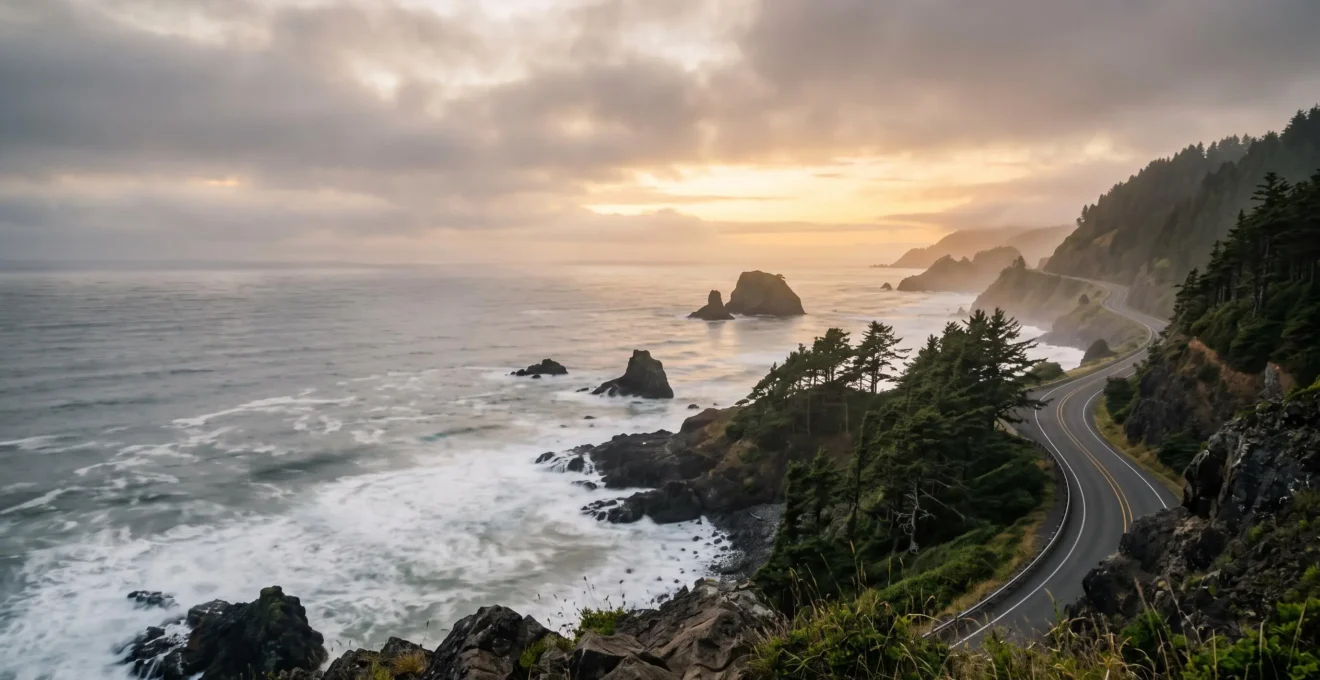
The real heart of the Pacific Coast Highway isn’t in California; it’s on the Oregon coast, offering more accessible wildness and fewer crowds.
- Oregon provides unique experiences like cinematic pilgrimages to Goonies filming locations and year-round whale watching opportunities.
- Its “People’s Coast” ethos, thanks to the 1967 Oregon Beach Bill, ensures public access to its most dramatic spots, unlike some stretches in California.
Recommendation: Swap the predictable, often congested Big Sur drive for an immersive Oregon adventure where you can feel the coast, not just view it from the car.
Picture the Pacific Coast Highway. Most likely, your mind conjures images of California’s Highway 1: the elegant arc of Bixby Bridge, sun-drenched cliffs, and a long line of convertible rentals inching along the coast. For decades, Big Sur has been marketed as the definitive American road trip. But as a resident of the Pacific Northwest, I have to let you in on a secret: the true soul of the drive, its moody grandeur and authentic wildness, lies further north.
Many travelers assume Oregon is simply the rainier, less-glamorous sibling to California’s golden coast. They see it as a pleasant but secondary option. This article challenges that notion. The key to an unforgettable coastal trip isn’t chasing perpetual sunshine, but embracing a dynamic, living coastline. We believe the Oregon experience—a journey of accessible wildness, cinematic nostalgia, and dramatic, storm-carved landscapes—offers a more profound and memorable adventure than the often-overcrowded spectacle to the south.
This isn’t about dismissing Big Sur’s beauty, but about revealing an alternative that is, in many ways, more rewarding. We’ll explore why Oregon’s iconic spots carry a unique cultural weight, how to pack for its invigorating climate, and where you can experience wildlife and adventure in ways California simply can’t match. Forget the traffic jams and the fight for parking at viewpoints; the real Pacific dream is waiting for you on Highway 101.
This guide delves into the specific experiences that make the Oregon coast a destination in its own right. From pop culture landmarks to unique natural phenomena, you’ll discover why so many travelers are choosing this rugged stretch of shoreline for their ultimate road trip.
Summary: A Local’s Case for the Oregon Coast Over Big Sur
- Why Cannon Beach is a mandatory pilgrimage for fans of The Goonies?
- K-way or T-shirt: what to pack for summer in Oregon?
- When to stop at viewpoints to see gray whales migrate?
- Phare or yourte : quel hébergement choisir pour une nuit face à la tempête ?
- How to rent a buggy to explore the Oregon dunes safely?
- Why you should never leave food in the car in bear country?
- Où trouver de l’eau potable gratuite pour éviter d’acheter 50 bouteilles en plastique ?
- Essential Packing List for Staying in a Remote Rustic Cabin
Why Cannon Beach is a mandatory pilgrimage for fans of The Goonies?
While California has Hollywood, Oregon has Astoria and Cannon Beach—the heartland of a cinematic nostalgia that feels far more personal and accessible. For anyone who grew up in the 80s, this stretch of coast isn’t just scenic; it’s sacred ground. The iconic Haystack Rock, looming out of the mist, isn’t just a geological wonder; it’s a key player in the treasure map from *The Goonies*. Visiting isn’t about seeing a filming location; it’s about stepping into a cherished childhood memory.
This connection is the town’s lifeblood, a cultural phenomenon that has far outlasted the film’s initial run. The financial impact was immediate, as the production famously injected over $1 million into the local economy back in the 80s. But the real story is its incredible longevity. This isn’t a passive piece of history; it’s an active, thriving fandom that draws thousands year after year, seeking to reconnect with that sense of adventure.
The enduring power of this nostalgia is staggering. As a testament to its cultural grip, local businesses and the community continue to celebrate this legacy. This isn’t just a quirky local footnote; it’s a powerful and sustained tourism driver, as highlighted by the ongoing celebrations:
For the 40th anniversary of its release, an estimated 10,000 people gathered in Astoria over one June weekend, and the town’s Goonies Facebook fan page has grown to more than two million followers, with local businesses actively working to turn that fandom into economic benefit.
This emotional connection offers something Big Sur can’t: a chance to inhabit a story. You’re not just a tourist admiring a view; you’re a Goonie on a quest. And that feeling is priceless.
K-way or T-shirt: what to pack for summer in Oregon?
The biggest misconception about the Oregon coast is the weather. While California promises relentless sun, Oregon offers something more interesting: a dynamic, moody atmosphere where you can experience four seasons in a single afternoon. The key isn’t to fear the rain, but to embrace the layers. A “summer” day here is a beautifully complex thing, with misty mornings giving way to bright, sunny afternoons and cool, windy evenings.
Forget the notion of needing a heavy winter coat. During the summer months, daytime temperatures typically hover between 55-70°F (13-21°C). This is the definition of perfect layering weather. You might start your morning hike in a fleece, be down to a t-shirt by midday as the sun breaks through, and be thankful for a windbreaker (the “K-way”) as the coastal breeze picks up at a panoramic viewpoint. This constant change is part of the coast’s moody grandeur; it keeps the landscape feeling alive and dramatic.
And what about swimming? The Pacific here is bracingly cold year-round. If you plan on getting in the water, a swimsuit won’t cut it. A wetsuit is essential, not just for surfing but for any extended play in the waves. Smart packing is the difference between being miserable and feeling perfectly attuned to the environment. Here are the essentials:
- Pack layers you can add or remove throughout the day as coastal temperatures swing.
- Bring a wetsuit instead of a swimsuit if you plan to enter the cold Pacific waters.
- Keep a windbreaker accessible at all times for exposed viewpoints and beaches.
- Choose closed, comfortable shoes over sandals for damp trails and rocky shorelines.
This isn’t inconvenient; it’s an invitation to be prepared for adventure, ready for whatever the majestic coastline decides to offer you.
When to stop at viewpoints to see gray whales migrate?
Whale watching in California is often a seasonal, ticketed event—a boat trip out to sea hoping for a glimpse during the migration. In Oregon, it’s a fundamental part of the roadside experience, a testament to our “living coastline.” While the main gray whale migrations are spectacular events in winter (southbound) and spring (northbound), Oregon offers a unique advantage: a resident population that makes whale spotting a year-round possibility.
Unlike the transient populations that just pass by, an estimated 200+ gray whales make the food-rich waters off the Oregon coast their summer home. This means from June to October, you have a genuine chance of spotting these magnificent creatures right from the shore. The state has even established the “Whale Watching Spoken Here” program, with volunteers staffing 24 designated viewpoints during peak weeks to help visitors. This is accessible wildness at its finest—no tour boat required.
Spotting them is a skill of patient observation. You’re not looking for a dramatic breach like you see in documentaries. You’re scanning the horizon for the subtle signs. First comes the blow, or spout, a puff of vapor that can shoot 12 feet into the air. This is your cue. After a series of breaths, the whale will perform a deeper dive to feed, often showing its fluke (tail fin) as it descends. When it’s gone, look for the “whale footprint”—a glassy, calm circle on the water’s surface where the whale’s powerful tail stroke smoothed the waves.
To become a pro whale-spotter from Highway 101, keep these tips in mind:
- Scan for the blow, which can shoot nearly 12 feet high.
- Note that whales usually surface every 20 seconds while swimming.
- Expect longer dives of 3 to 5 minutes when whales are feeding near the shore.
- Watch for up to 5 consecutive blows at the surface after a long dive before the whale descends again.
This constant, quiet possibility of an encounter transforms every viewpoint from a simple photo op into a moment of potential magic.
Lighthouse or yurt: which stay to choose for a night facing the storm?
One of the most thrilling experiences the Oregon coast offers is storm watching, a popular pastime from November to March. When the weather turns, the coastline puts on a spectacular show of raw power. Choosing where to watch this drama unfold is part of the adventure. Your two most iconic Oregon options—a historic lighthouse keeper’s cottage or a cozy state park yurt—offer vastly different, yet equally compelling, experiences.
Staying near a lighthouse, like those at Cape Meares or Heceta Head, is about immersing yourself in history and high drama. These were once the lonely outposts for keepers who guided ships through treacherous waters. Renting a keeper’s cottage places you on a windswept bluff, with a front-row seat to the crashing surf below. You’ll hear the mournful call of the foghorn and feel the same wind that has battered the cliffs for centuries. It’s a romantic, dramatic, and slightly haunting experience, connecting you to the maritime soul of the coast.
The yurt, on the other hand, is a more modern Oregon icon that offers rustic immersion. Found in many of Oregon’s stunning State Parks, like those at Umpqua Lighthouse or Fort Stevens, a yurt provides a cozy, circular shelter. You’re closer to the ground, hearing the rain patter on the canvas roof and the wind whistling through the surrounding shore pines. It’s a warm, secure cocoon amidst the wildness. After a day of getting blasted by wind and spray on the beach, retreating to a warm, simple yurt with the sound of the storm raging outside is pure comfort. It’s less about observing the storm from on high and more about being safely tucked within it.
The choice comes down to the kind of story you want to live. Do you want the epic, windswept drama of a 19th-century novel? Choose the lighthouse. Or do you prefer the cozy, back-to-nature simplicity of a warm shelter in the woods? Choose the yurt. Either way, you’re signing up for an unforgettable night.
How to rent a buggy to explore the Oregon dunes safely?
While Big Sur’s cliffs are for viewing, the Oregon coast has landscapes designed for playing. The Oregon Dunes National Recreation Area is a prime example—a 40-mile stretch of wind-sculpted sand, some dunes towering 500 feet above the ocean. This is one of the largest expanses of coastal sand dunes in the world, and the best way to experience its scale is by renting an ATV or dune buggy. This is an adrenaline-pumping activity that offers a unique perspective on the coast’s power and beauty.
This isn’t a free-for-all, however. Exploring this massive sandbox requires a serious commitment to safety and environmental respect. The dunes are a dynamic environment with blind crests and constantly shifting sands. They are also a delicate habitat for species like the western snowy plover. Because of this, beach restrictions are in effect from March 15 to September 15 in designated areas to protect nesting sites. Responsible riding is paramount.
Rental outfitters in towns like Florence or North Bend will provide you with a vehicle and a basic orientation, but it’s your responsibility to ensure you have the right gear and knowledge. Safety isn’t just a suggestion here; it’s a requirement enforced by law and common sense.
Your Pre-Ride Safety Checklist: Gearing Up for the Dunes
- Vehicle Prep: Confirm your ATV or UTV has a required spark arrester and a mounted safety flag that is orange or red and stands at least 9 feet high.
- Mandatory Equipment: Ensure you have a fire extinguisher, functional lights for changing conditions, and a properly-fitting helmet.
- Personal Protection: Wear goggles, gloves, long sleeves, long pants, and over-the-ankle boots to shield yourself from sun, wind, and stinging sand.
- Visibility: The high flag is non-negotiable. It allows other riders to see you over the crests of dunes, preventing collisions.
- Environmental Awareness: Know the seasonal wildlife closure areas and respect all posted boundaries to protect sensitive habitats.
Riding the dunes is an exhilarating experience that connects you to the raw, formative power of the coast in a way that a simple viewpoint never could.
Why you should never leave food in the car in bear country?
The “wildness” of the Oregon coast isn’t just a scenic descriptor; it’s a reality that includes sharing the landscape with wildlife, including black bears. While encounters are rare, the single biggest factor that leads to negative interactions is human carelessness with food. The rule is simple and absolute: never leave food, coolers, or any scented items in your car overnight.
A bear’s sense of smell is legendary—estimated to be seven times more powerful than a bloodhound’s. That sealed bag of chips, empty soda can, or even scented air freshener is like a giant neon sign for a hungry bear. They can smell it from miles away. Leaving these items in your car is an open invitation for a 400-pound animal to investigate. And a curious bear doesn’t politely check if the door is unlocked; it will peel open a car door like a can of tuna, shattering windows and causing thousands of dollars in damage.
But the real tragedy isn’t the damage to your vehicle. It’s what happens to the bear. A bear that gets a “food reward” from a car learns to associate vehicles and humans with an easy meal. This is called habituation. A habituated bear loses its natural fear of people, becoming bolder and more aggressive in its search for food. It may begin approaching campsites or homes, creating a dangerous situation for everyone. In the vast majority of these cases, the end result is that the bear must be euthanized by wildlife officials. The saying among rangers is stark but true: “a fed bear is a dead bear.”
So, when you properly store your food in a designated bear locker at a campsite or take it into your hotel room, you’re not just protecting your property. You’re protecting the wild animals whose home you are visiting. It’s a fundamental act of respect for the accessible wildness that makes Oregon so special.
Where to find free drinking water to avoid buying 50 plastic bottles?
A road trip along the coast can quickly generate a mountain of plastic waste, especially from single-use water bottles. Part of what defines the Oregon ethos is a deep respect for the natural environment. The state’s infrastructure reflects this, making it incredibly easy to travel sustainably and avoid contributing to plastic pollution. This is a core tenet of visiting what many call “The People’s Coast.”
Your first and most important piece of gear should be a reusable water bottle. The secret to never having to buy a plastic bottle is knowing where to fill up for free. Oregon’s extensive network of State Parks is your best friend. Nearly every state park, whether it’s a major campground or a simple day-use picnic area, has public water spigots with clean, safe drinking water. These are typically located near restrooms or in designated visitor areas.
Beyond the parks, here are other reliable sources:
- Visitor Centers and Ranger Stations: These facilities almost always have water fountains or taps available to the public.
- Public Rest Areas: The rest stops maintained by the Oregon Department of Transportation along Highway 101 are another dependable source.
- Campgrounds: Even if you’re not staying overnight, most campgrounds have easily accessible water sources near their entrance or main loops.
By making it a habit to top off your reusable bottle at every opportunity, you can easily complete a week-long trip without ever purchasing water. It’s a simple act that saves money, reduces waste, and aligns with the conservationist spirit that keeps the Oregon coast so pristine. It’s a small effort that makes a big difference in preserving the beauty you came to see.
Key Takeaways
- The Oregon coast offers “accessible wildness,” where you can actively experience nature, not just view it from a distance.
- Its dynamic, moody climate is a feature, not a bug, creating dramatic landscapes and requiring smart, layered packing.
- Unique cultural and natural draws, like Goonies nostalgia and a resident whale population, provide experiences you won’t find in California.
Essential Packing List for Staying in a Remote Rustic Cabin
Your journey along the Oregon coast is now complete, and you’ve chosen to end it by immersing yourself in nature with a stay in a rustic cabin. This is the perfect way to cap off an adventure focused on authenticity. But “rustic” is often code for “bring your own stuff.” Unlike a hotel, these charming cabins provide shelter but often lack basic amenities. A well-prepared packing list is the difference between a cozy retreat and a frustrating ordeal.
Think of your cabin as a base camp. Power can be intermittent in remote areas, cell service spotty, and the nearest store a long drive away. Your packing should focus on self-sufficiency and comfort. Prioritize lighting, warmth, and basic kitchen functions. A common mistake is assuming things like bedding or even basic cookware will be provided. Always check with the rental agency, but it’s wise to prepare for the bare minimum.
Here is a foundational list, broken down by category, to ensure your rustic cabin stay is comfortable and stress-free:
- Bedding & Comfort: Many rustic cabins do not provide linens. Pack a sleeping bag and pillow, or sheets and a warm blanket. An extra wool blanket is never a bad idea for chilly coastal nights.
- Lighting: Don’t rely on the cabin’s electricity. Bring multiple light sources. A powerful headlamp is non-negotiable for hands-free navigating in the dark, both inside and out. A battery-powered lantern is great for ambient light.
- Kitchen Essentials: Assume the kitchen is empty. Bring a small pot, a frying pan, basic utensils, a can opener, a cutting board, and a sharp knife. Pack coffee or tea and a way to make it (like a French press or pour-over cone). Waterproof matches or a lighter are critical.
- Safety & Practical Items: A well-stocked first-aid kit is essential. Download offline maps of the area to your phone before you lose service. Bring a portable power bank to keep your devices charged.
Being prepared allows you to relax and truly soak in the tranquility of your surroundings, turning a bare-bones cabin into your own private sanctuary on the edge of the continent.
Now that you’re equipped with an insider’s perspective, it’s time to act. Stop scrolling through the same crowded photos of Big Sur and start planning the immersive, authentic coastal adventure you’re truly looking for on the wild shores of Oregon.